Olympic National Park With Kids: The Ultimate 3-Day Itinerary
Olympic National Park is one of those places in the US that feels truly magical.
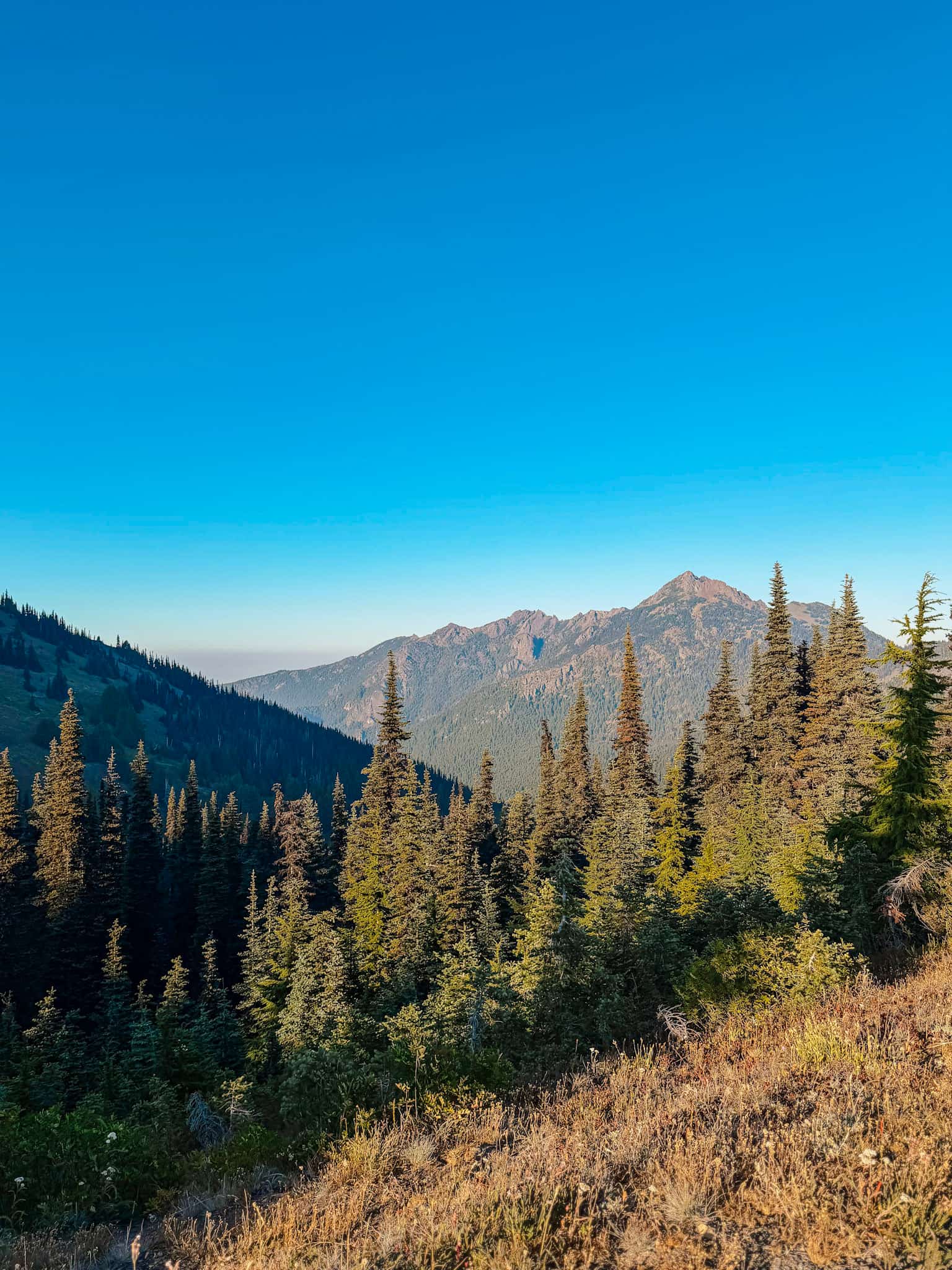
One day, you’re walking through a rainforest covered in moss. The next, you’re exploring rugged beaches with sea stacks rising out of the Pacific Ocean. A few hours later, you can be standing beside a crystal-clear glacial lake or looking out over the Olympic Mountains.
That variety is exactly what makes Olympic National Park such an incredible destination for families.
We visited Olympic National Park as part of our 10-day Washington and Oregon camper van road trip, and even after several days exploring the park, it felt like we had barely scratched the surface.
Olympic National Park is huge—nearly a million acres—and its most popular destinations are spread out across the Olympic Peninsula. This is not the kind of national park where you drive through one entrance and find all of the major attractions within a few minutes of one another.
Planning your route and strategically choosing where to stay can make a huge difference in how much driving you do.
For families visiting for the first time, I recommend giving yourself at least three days. That gives you enough time to experience the three vastly different landscapes that make Olympic National Park so unique: the temperate rainforest, the Pacific coastline, and the mountains.
This was the route we followed during our trip, along with everything I would recommend adding if you’re planning to visit Olympic National Park with kids.
Olympic National Park With Kids: Our 3-Day Itinerary at a Glance
If starting from Portland:
Day 1: Quinault Rainforest → Kalaloch → Ruby Beach → Hoh Rainforest
Day 2: Hoh Rainforest → Second Beach → Cape Flattery → Sol Duc Falls
Day 3: Sol Duc → Salt Creek → Lake Crescent → Madison Falls → Hurricane Ridge
If starting from Seattle:
Day 1: Hurricane Ridge → Sol Duc Falls → Lake Crescent → Salt Creek
Day 2: Cape Flattery → Second Beach → Hoh Rainforest
Day 3: Ruby Beach → Kalaloch Beach → Quinault
If you have more than three days, I would definitely recommend slowing this itinerary down and really take the time to explore this incredible national park. Olympic is one of those parks where you could easily spend a week exploring different regions.
Why Olympic National Park Is So Great for Families
I think Olympic National Park works especially well for families because there is so much variety.
Not every day has to be spent hiking.
You can spend one morning walking a short trail through the Hoh Rainforest and then spend the afternoon exploring tide pools.
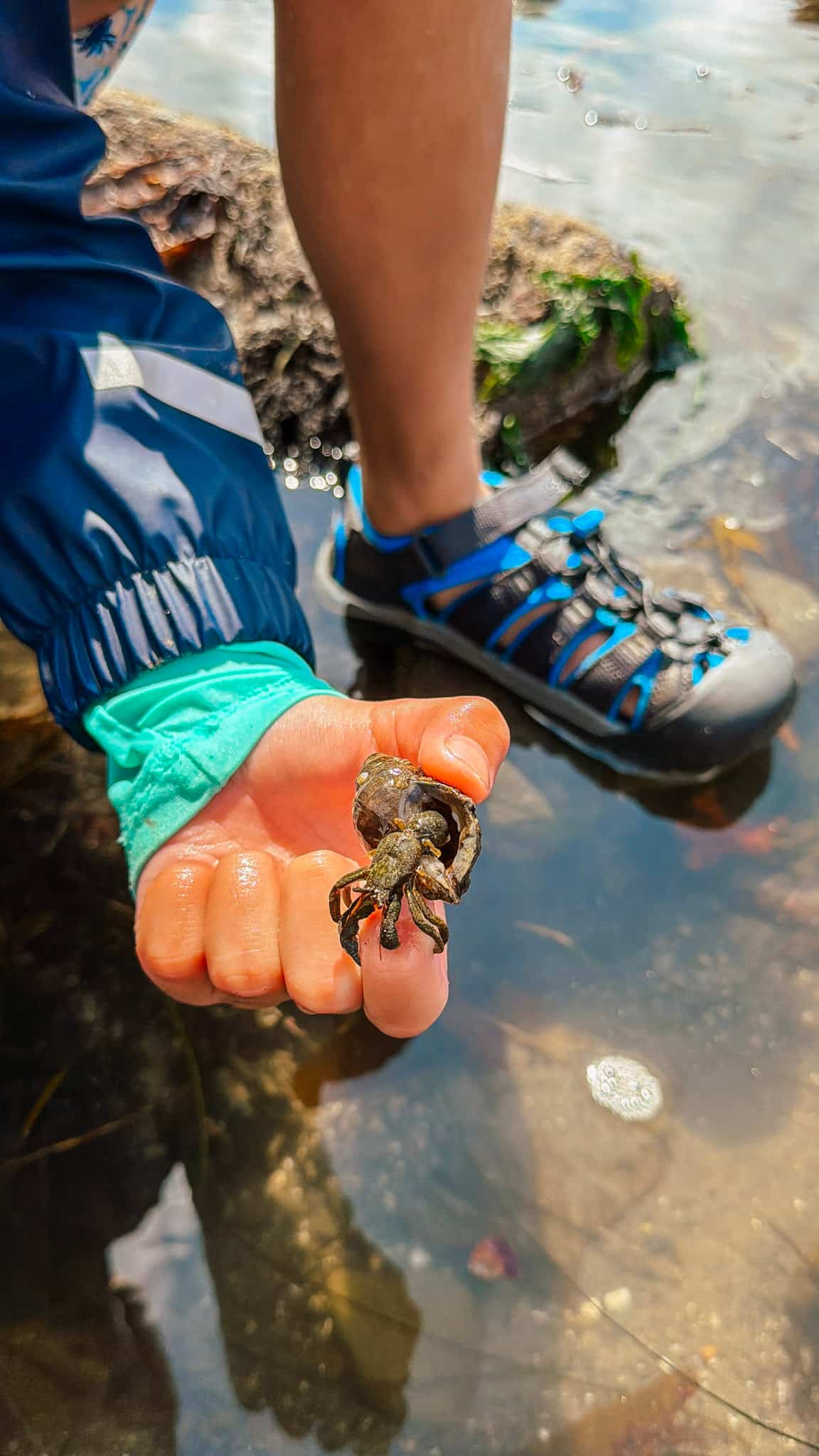
There are waterfalls that require less than a mile of walking, tide pools filled with marine life, scenic drives, beaches where kids can run and play, and mountain viewpoints that are accessible without a long hike.
The park also has a number of short trails that work well for younger children. Hall of Mosses, Spruce Nature Trail, Second Beach and the Hurricane Ridge area all give families the opportunity to experience some of Olympic’s most memorable landscapes without committing to an all-day hike.
The biggest challenge is not finding things to do.
It’s deciding what you can realistically fit into one trip.
What to Know Before Visiting Olympic National Park With Kids
Olympic National Park Is Huge
This is probably the most important thing to understand before planning your trip.
Olympic National Park covers an enormous area, and many of the park’s most popular destinations are separated by long drives.
If you truly want to experience the majesty of Olympic National Park, give yourself multiple days, and I suggest splitting overnight accommodations between the northern side of the park and the western side to reduce driving.
For example, Hurricane Ridge and Lake Crescent are much more convenient to visit from Port Angeles, while the Hoh Rainforest and coastal destinations are better positioned for visitors staying near Forks or Kalaloch.
That means choosing where to sleep each night is just as important as deciding what you want to see.
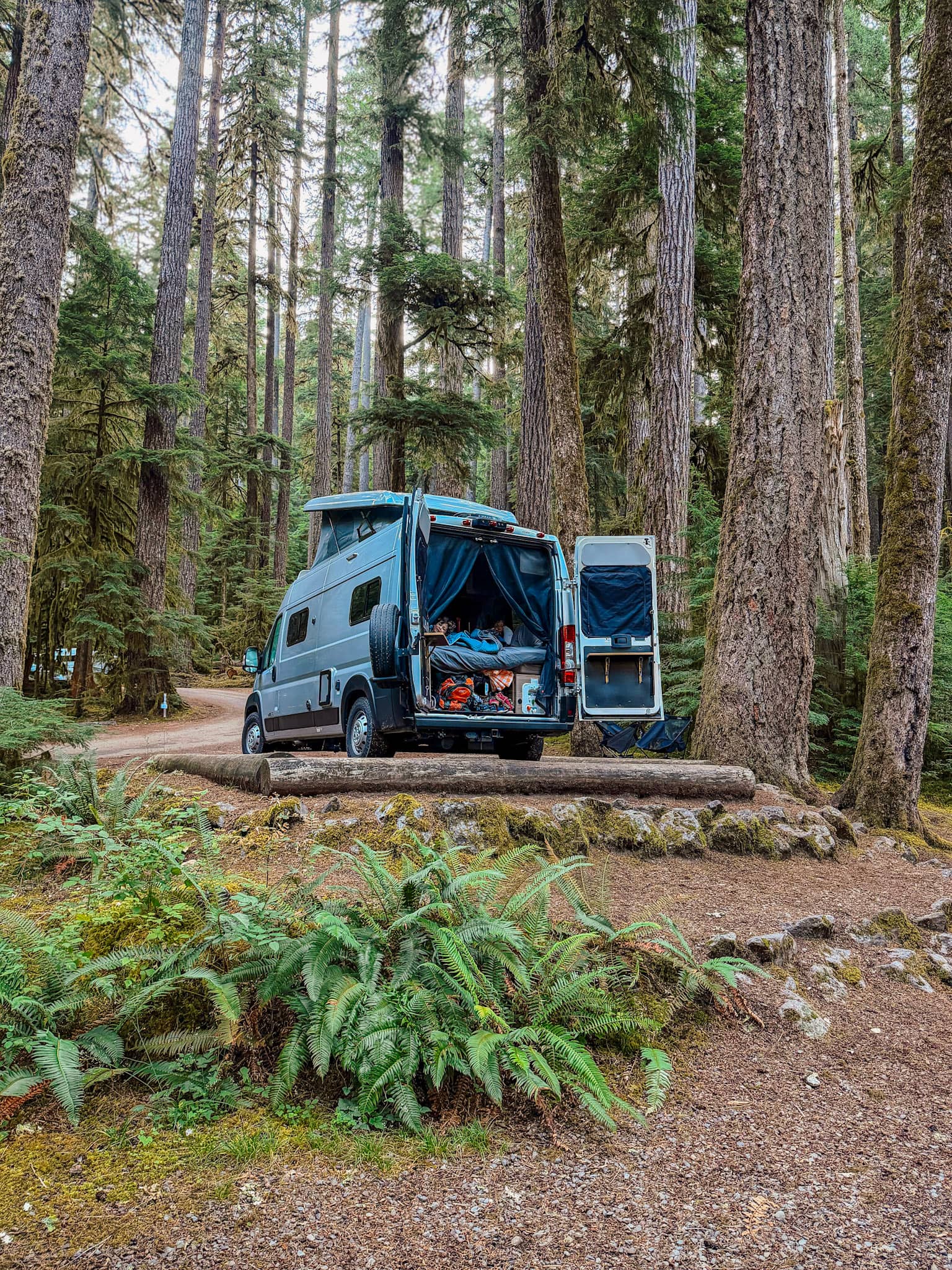
I highly recommend renting a camper van or RV for this trip, as it offers such a flexible and unique way to explore Olympic National Park.
I also recommend downloading the Olympic National Park Guide Along tour before your visit. This audio tour offers so much history and information on the park, and feels like you have your own personal tour guide sitting in the front seat.
Also read: Where to Stay in Olympic National Park
Plan Around the Tides
If exploring tide pools is high on your family’s list, make sure to check the tide charts before building your itinerary.
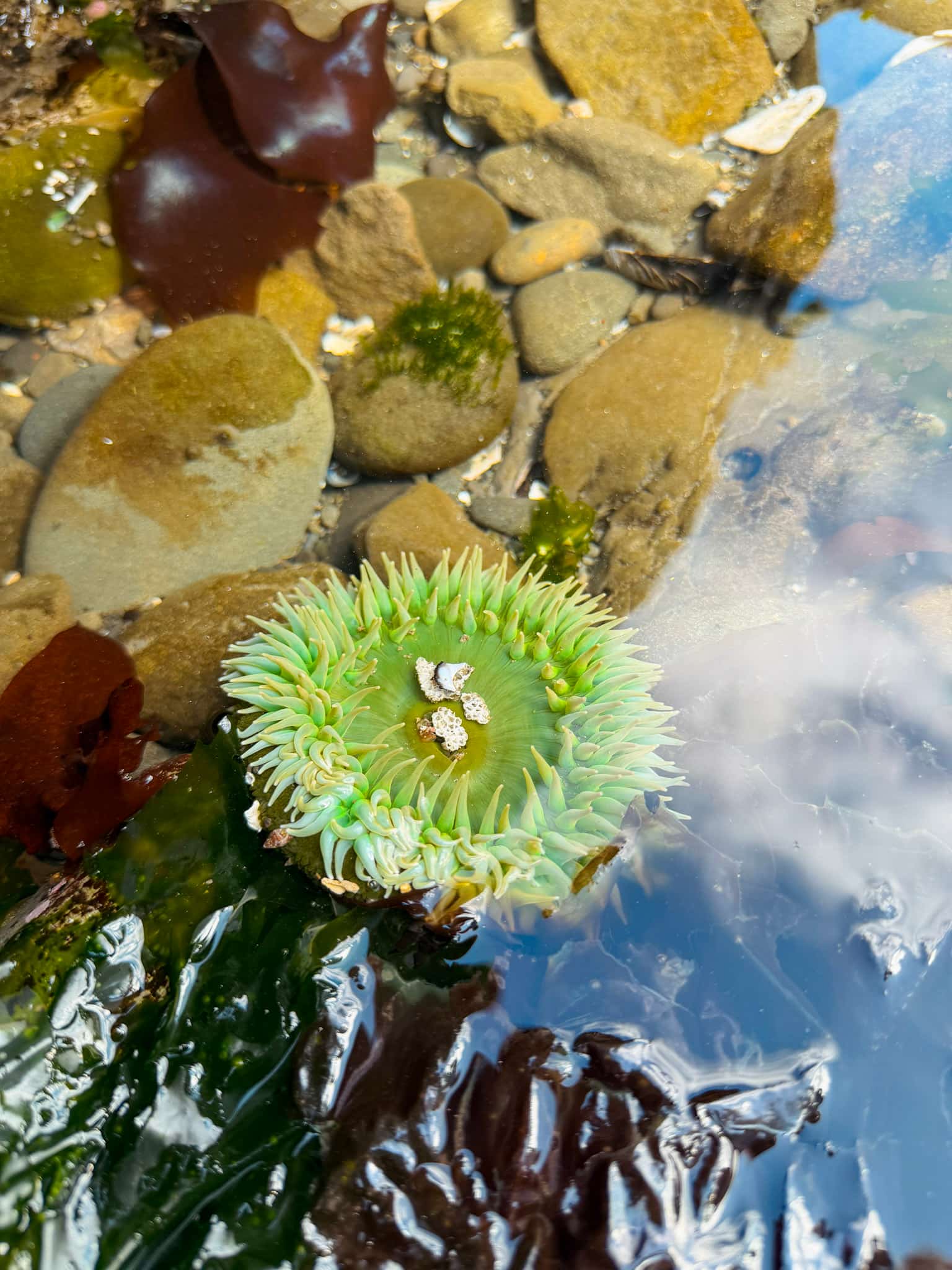
Several of the coastal destinations are much more interesting at low tide, when tide pools are easiest to explore.
Use websites like this one to see when the best time to visit for tide pooling is.
Read next: The Best Beaches & Tide Pooling in Olympic National Park with Kids
Visit Early or Later at Popular Spots
Some of the really popular spots in Olympic National Park, such as the Hoh Rainforest and Hurricane Ridge, fill up fast during peak times. That means you could get stuck sitting and waiting in a long line, wasting hours of your day.
Plan your day to visit this popular spots before 9 a.m. or after 5 p.m. when most of the crowds have gone home for the day.
Camping nearby, such as in the Hoh Rainforest campground, is another great way to get an early start and not have to worry about finding a highly coveted parking spot.
Day 1: Quinault Rainforest, Kalaloch and Ruby Beach
Our first day exploring Olympic National Park focused on the southern and western portions of the park.
We were coming from the Oregon Coast, so this route allowed us to work our way north toward the Hoh Rainforest campground, where we camped in our camper van for the night.
Quinault Rainforest
Our first stop was the Quinault area.
While the Hoh Rainforest gets most of the attention, Quinault is another amazing place to experience Olympic’s temperate rainforest.
We explored the Kestner Homestead Loop, an easy 1.3 mile loop that takes you through the stunning rainforest and to the historic Kestner homestead.
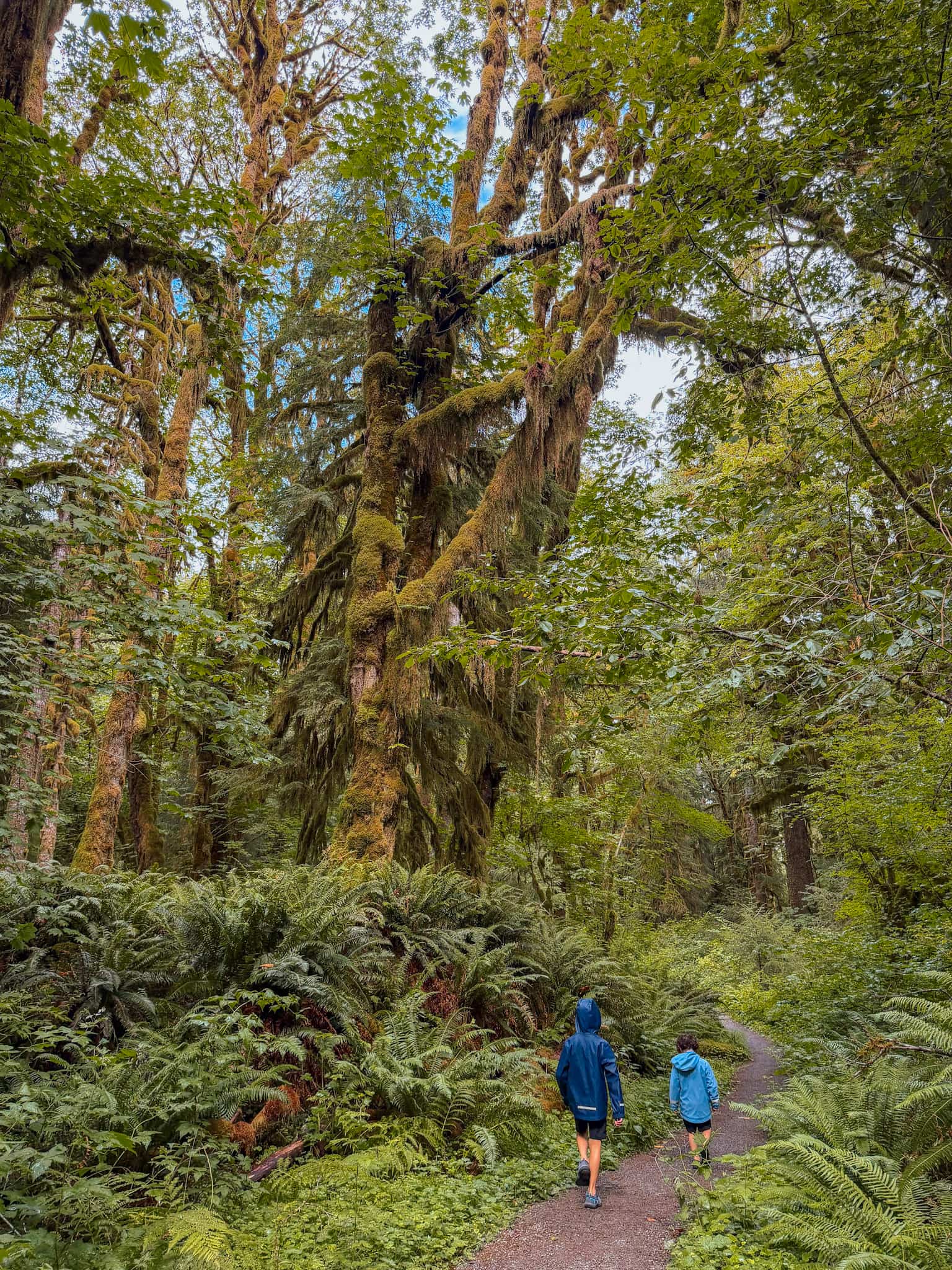
You can also shorten your hike by taking the Maple Glade Trail, which is only a 0.5-mile loop and follows the same path as the Kestner Homestead trail.
The forest here immediately gives you a sense of what makes this region so different from many other national parks.
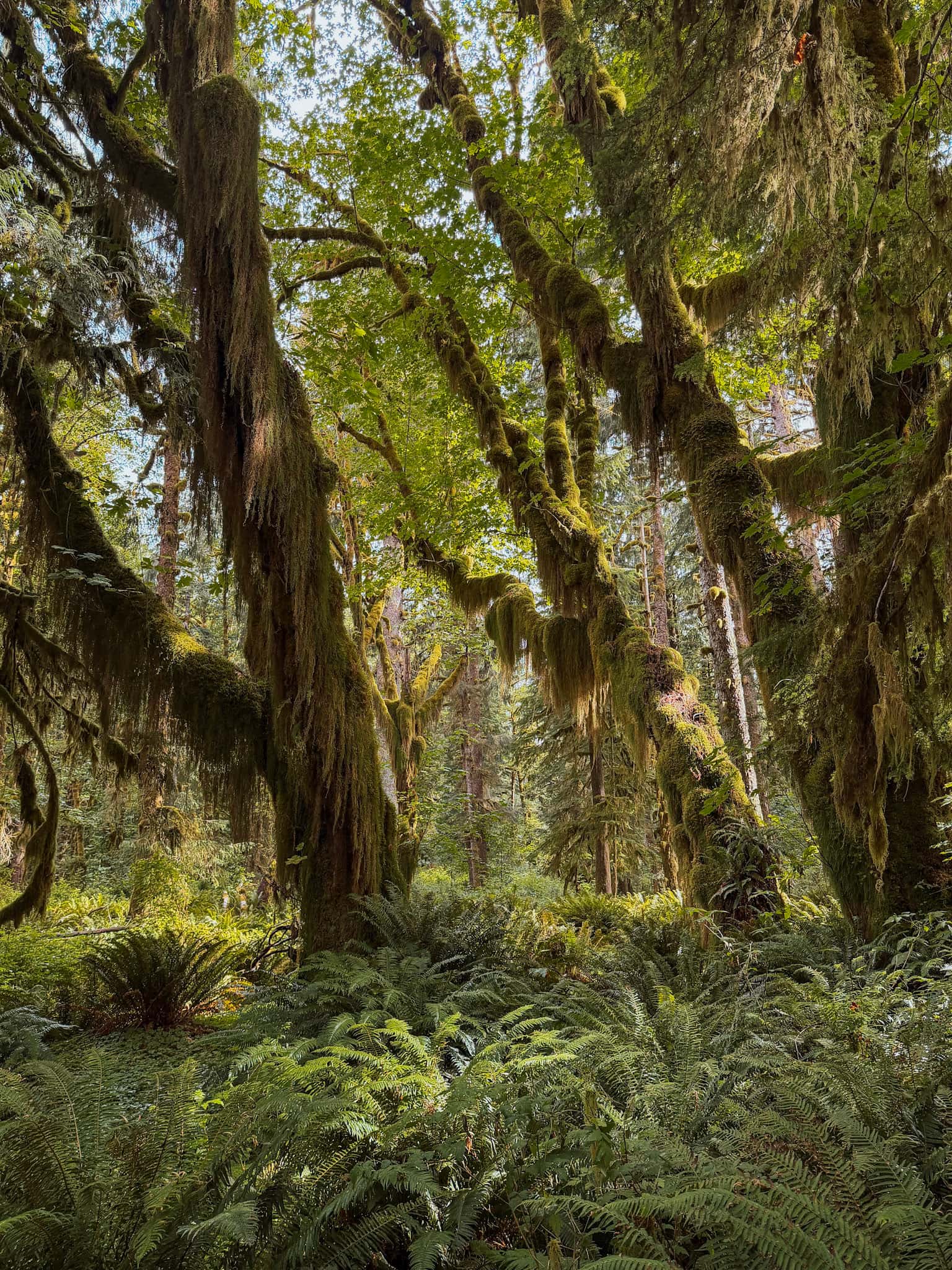
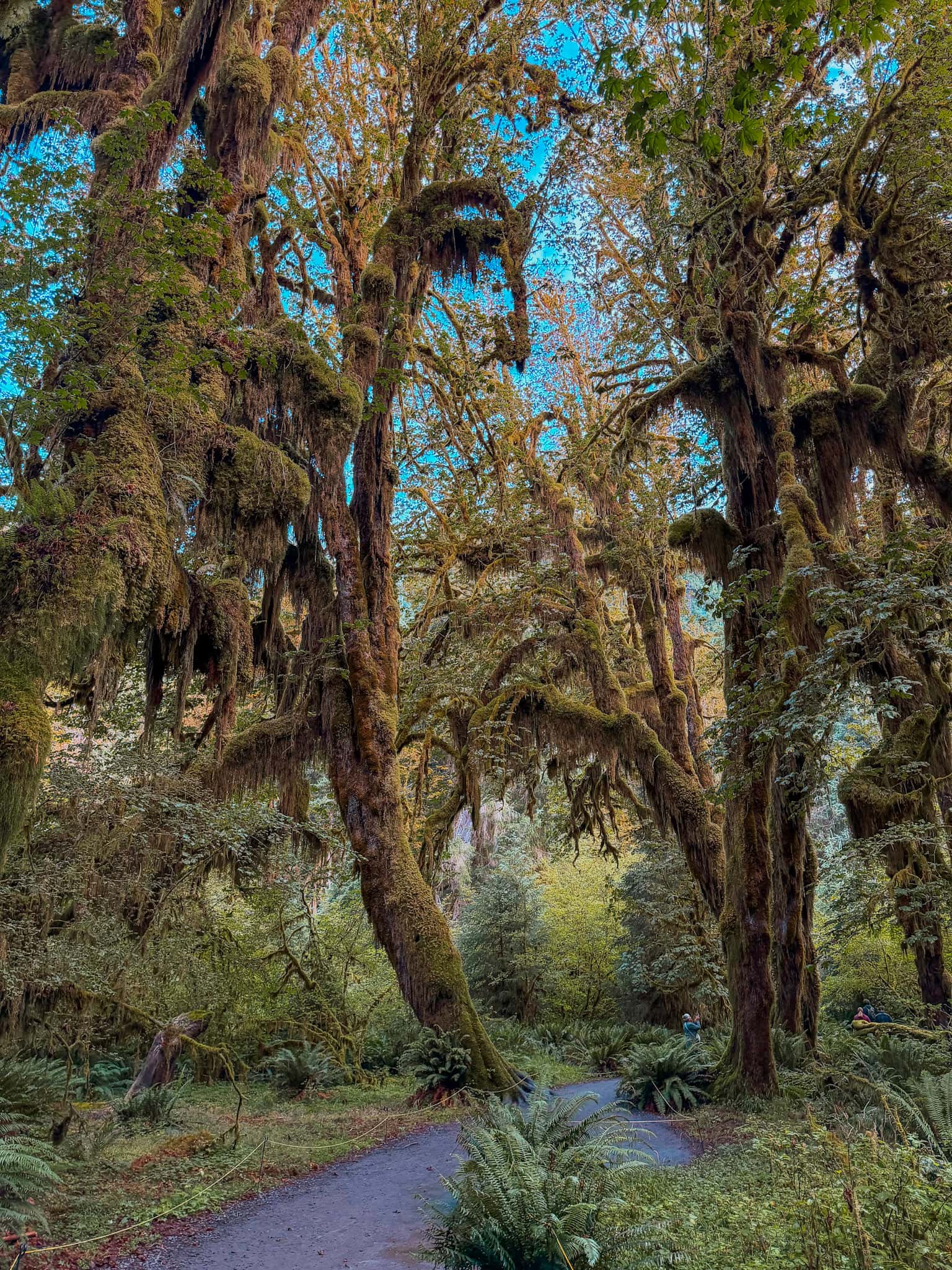
The trees are enormous, the ground is covered in ferns, and moss seems to grow on nearly everything.
If you’re coming from the south, Quinault is a great first stop before continuing toward the coast.
Kalaloch and the Tree of Life
From Quinault, continue north toward the Kalaloch area.
Kalaloch Beach is a great place to spend some time walking along the shoreline, but one of the most interesting things to see here is the famous Tree of Life.
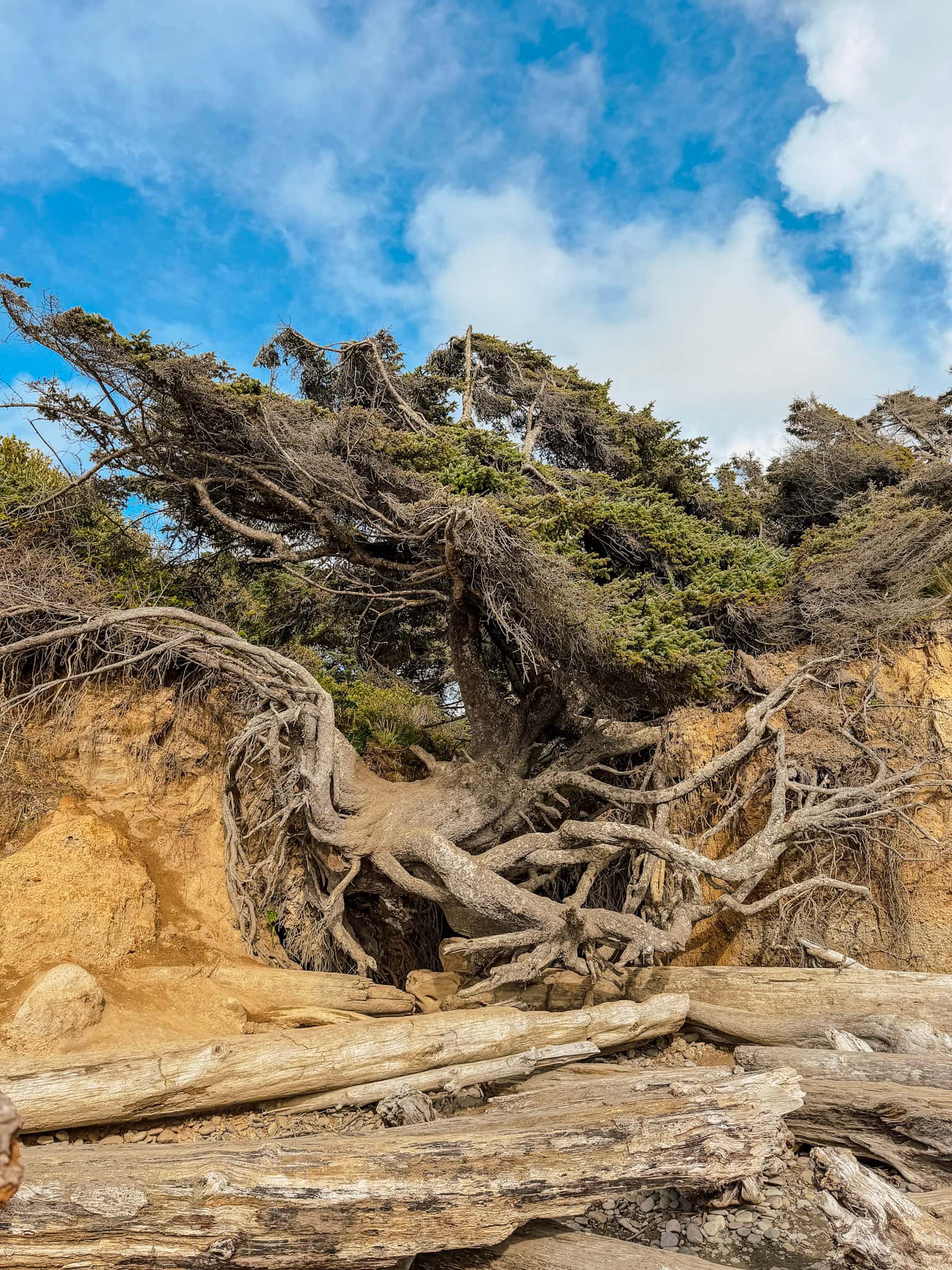
The tree sits along an eroding bluff with its roots completely exposed beneath it, creating the illusion that it is suspended over the ground.
The beach here is so fun for kids and offers a great shoreline for splashing in the water, building sandcastles, or playing with the washed up driftwood.
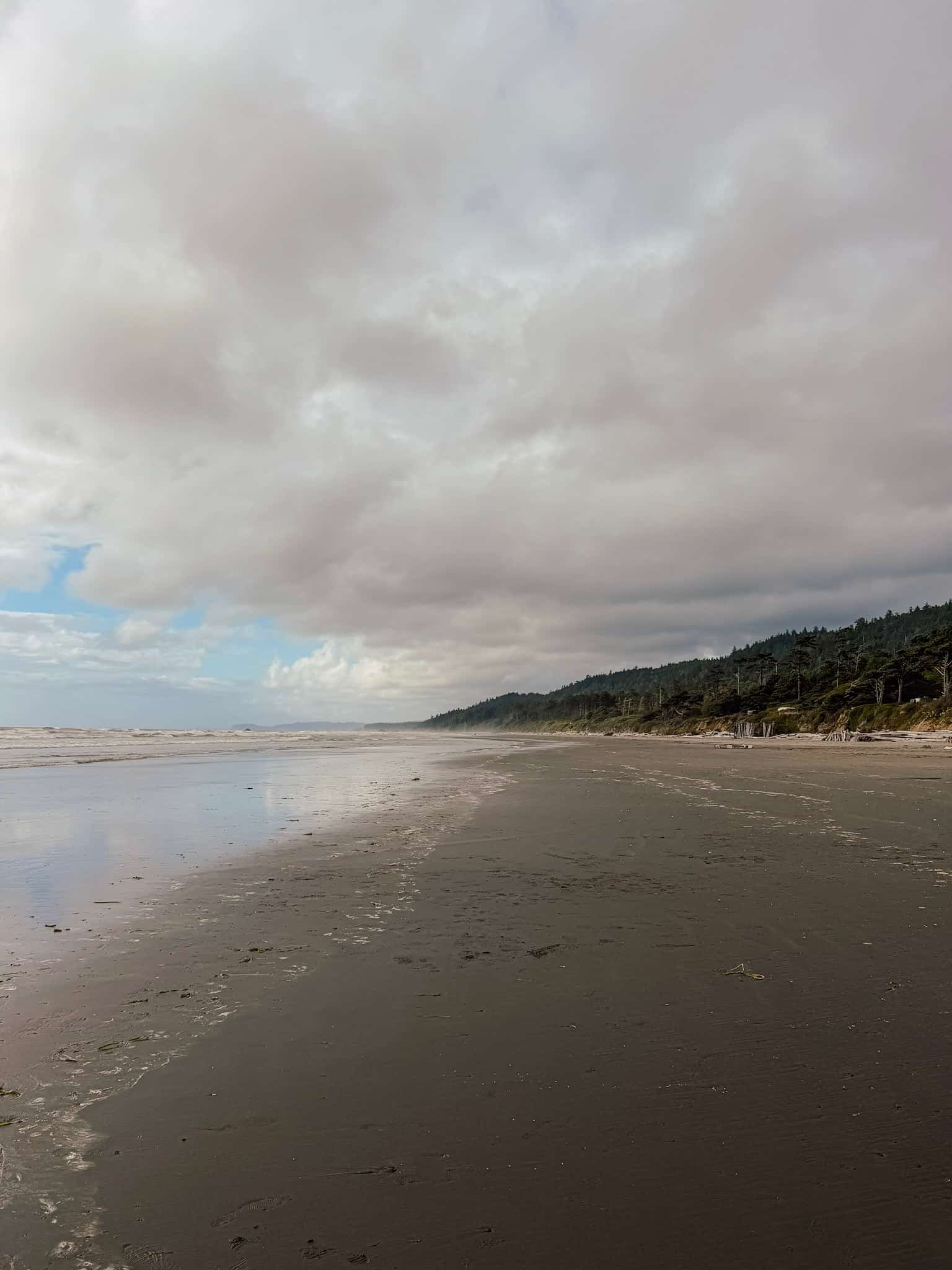
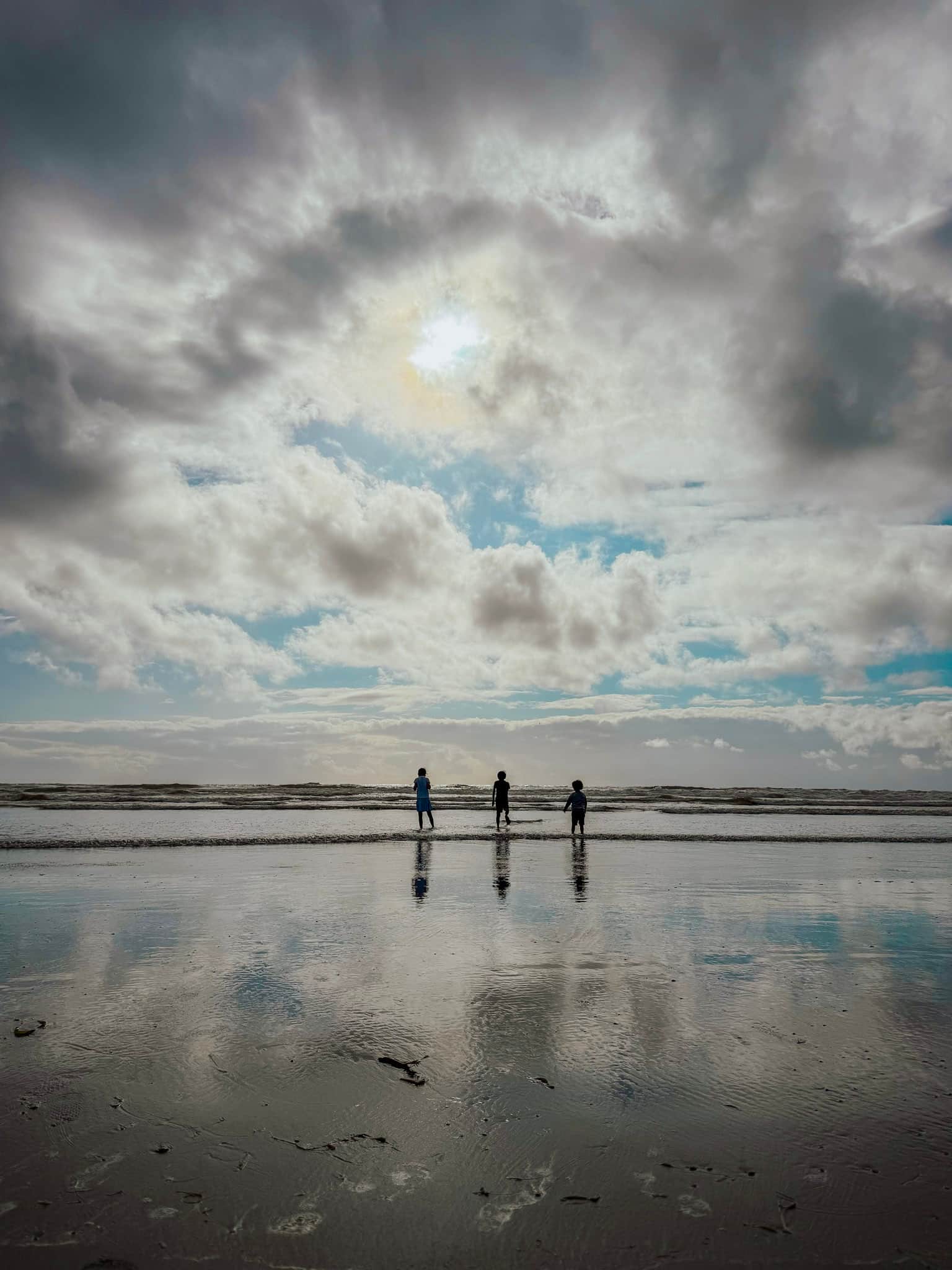
There are also tide pools here, and the chance to spot some of the areas amazing wildlife, like sea otters, bald eagles, puffins and seals.
Ruby Beach
Just a quick drive down the road and you can stop at Ruby Beach, one of the most recognizable beaches in Olympic National Park.
The trail down to the beach is quick and short, and the shoreline is lined with massive pieces of driftwood with sea stacks rising from the tides.
This is an amazing spot to spend a few hours soaking in the ocean views, and maybe even catch a sunset.
Drive to the Hoh Rainforest or Forks for the Night
If your plan is to either tent or RV camp, continue north and head inland toward the Hoh Rainforest to set up for the night.
Staying in the Hoh Rainforest Campground puts you in the perfect location for an early start the next morning to beat the crowds and is incredibly convenient.
Make sure to book reservations well ahead of time, as this is a very popular campground and fills quickly!
If camping or RV-ing isn’t your thing, I would recommend staying in Forks for the night.
Here are some good lodging options:
- Hoh Valley Cabins – a cabin with a full kitchen, with close proximity to Hoh
- Quileute Oceanside Resort – stunning ocean views, full kitchen + living area
- Misty Valley Inn – family rooms + beautiful outdoor area
Day 2: Hoh Rainforest, Second Beach, Cape Flattery and Sol Duc
Day 2 will be spent in some completely different landscapes: from rugged coastline to lush rainforest.
Hall of Mosses
Start your morning early with one of Olympic National Park’s most iconic hikes.
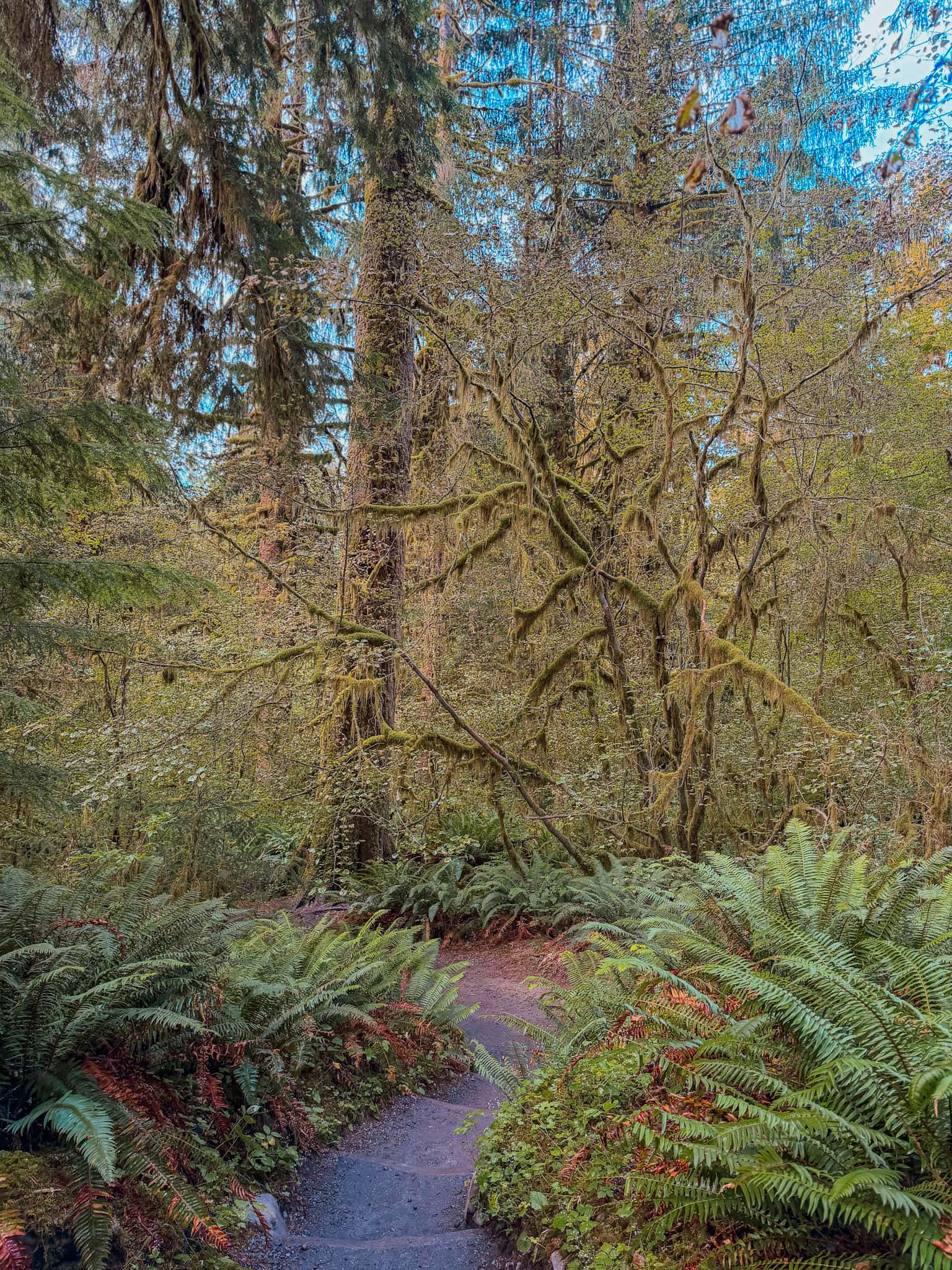
The Hall of Mosses Trail is an easy 1 mile loop through old-growth temperate rainforest located inside the Hoh Rainforest.
Massive trees are dripping in moss, the trail is lined by huge ferns, and the forest feels prehistoric.
It’s short enough for families of all ages to enjoy, and it truly feels like you’re walking through a scene of Jurassic Park.
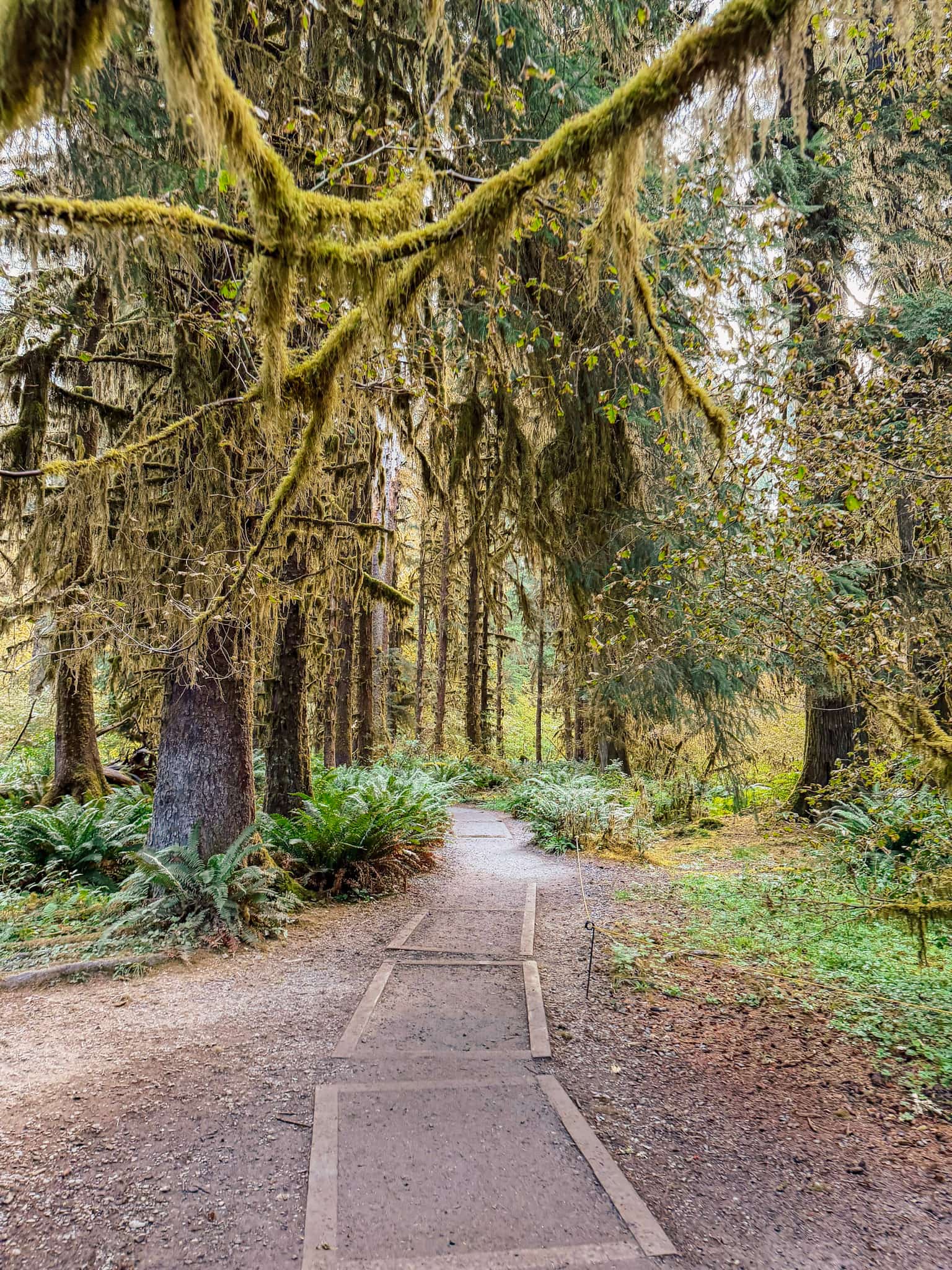
The Hall of Mosses is probably the most popular trail in the park, and the park lot fills extremely quickly during peak season. I highly recommend you aim to be in the parking lot by 8 a.m. to avoid sitting in line waiting for a spot.
Spruce Nature Trail
After Hall of Mosses, continue to the Spruce Nature Trail.
This 1.2-mile loop takes you through both old- and new-growth forest and eventually follows Taft Creek and the Hoh River.
Hall of Mosses gives you that iconic, moss-covered rainforest experience, while Spruce Nature Trail provides a little more variety and opens up toward the river.
Second Beach
After leaving the Hoh Rainforest, head toward the coast and hike to Second Beach.
The hike itself is approximately 0.8 miles each way through the lush forest before opening onto a dramatic stretch of coastline.
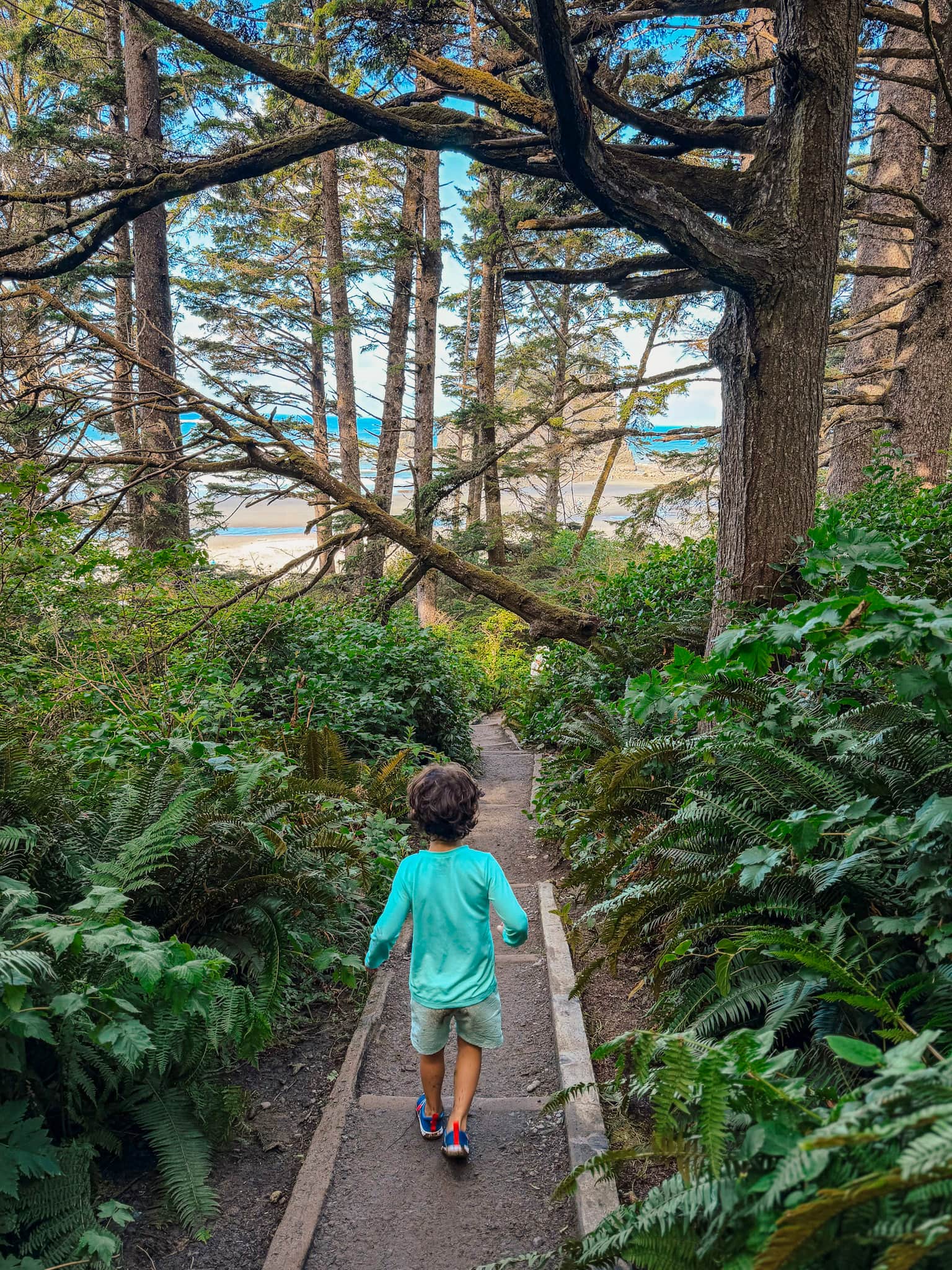
This was one of my favorite stops in Olympic National Park, and do not let the hike deter you from visiting!
It’s such a fun trail, and the contrast between the lush forest and the bright beach makes arriving at the coast feel so dramatic.
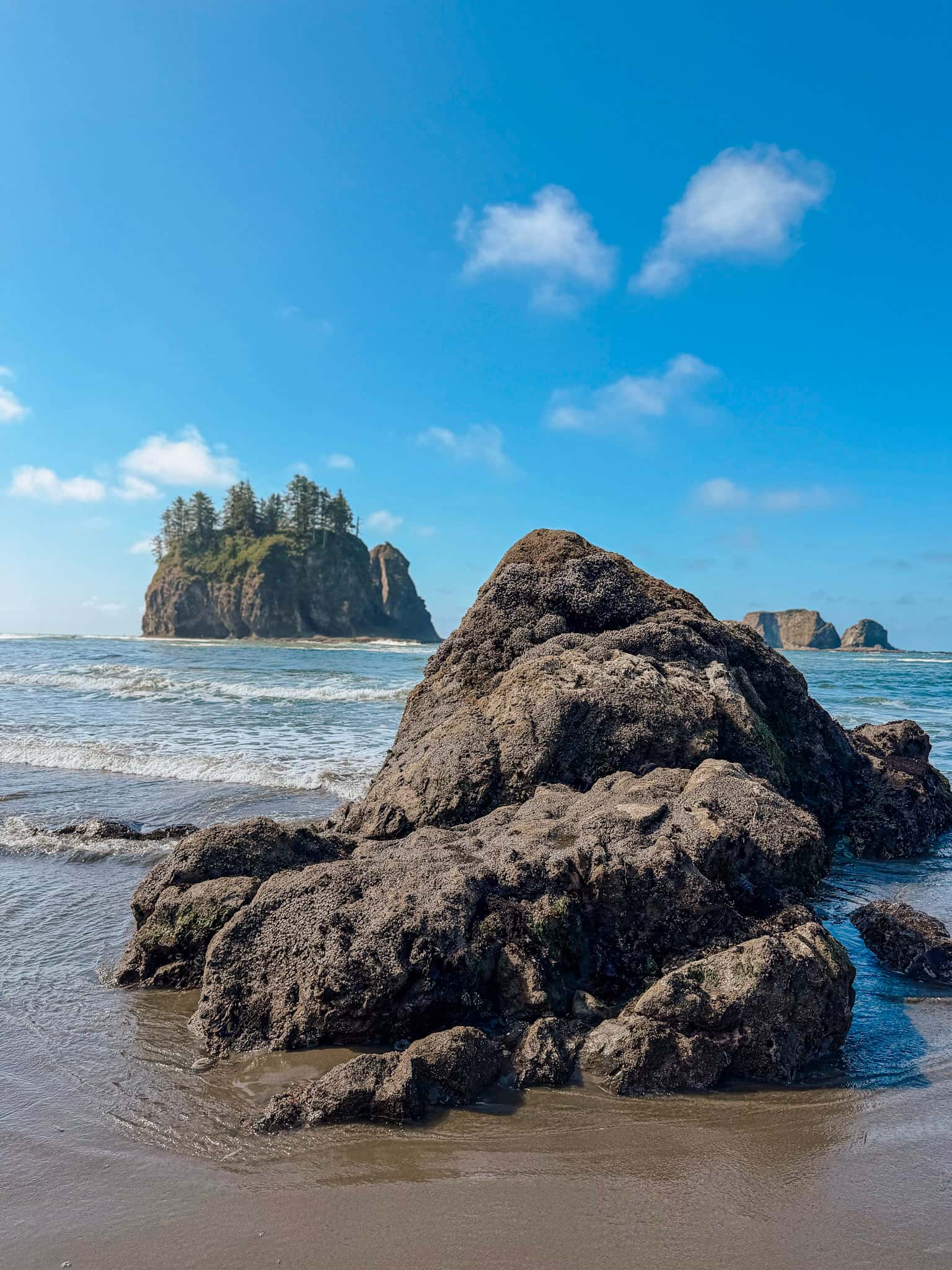
Massive sea stacks rise out of the water, driftwood covers portions of the beach, and you can find crabs, anemones and sea stars by the hundreds here.
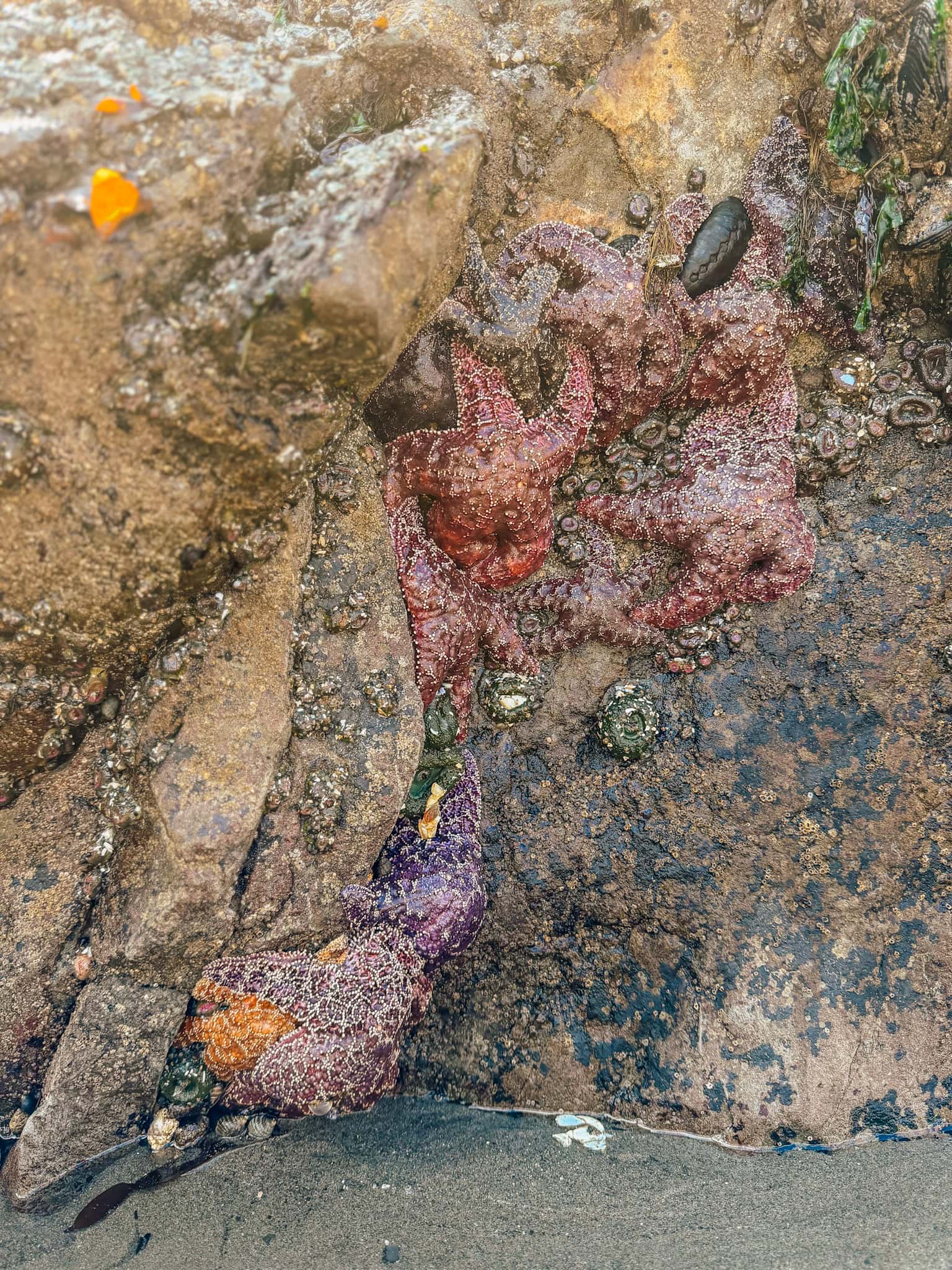
Make sure to check the tide chart before you go – visiting at low tide will give you the best tide pooling experience.
Cape Flattery
After you’ve spent a few hours exploring Second Beach, it’s time to head toward Cape Flattery.
Located near the northwestern tip of Washington, Cape Flattery is technically located outside Olympic National Park but is an easy and worthwhile addition to your Olympic Peninsula itinerary.
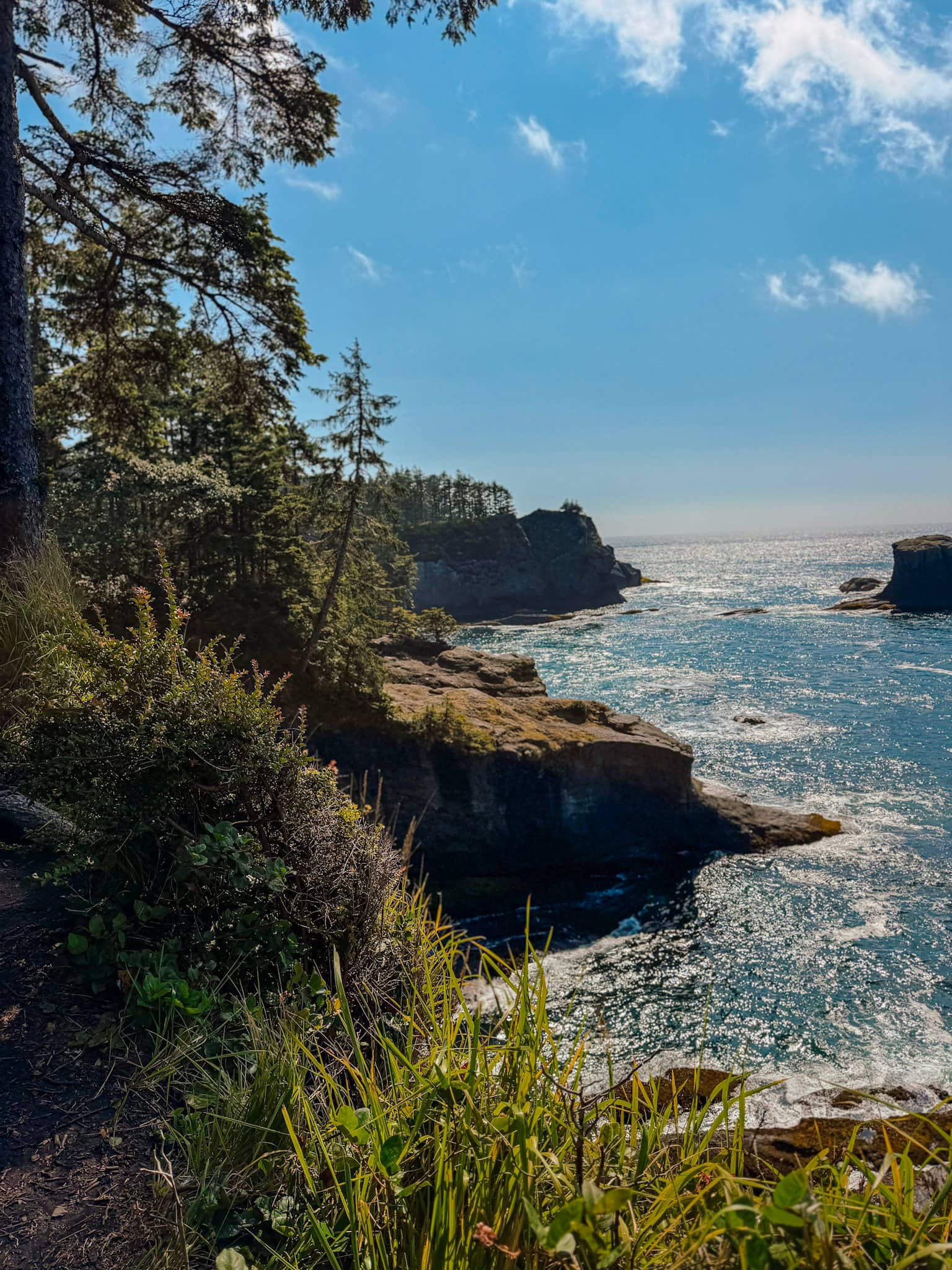
The 1.2 mile trail takes you through a beautiful forest on a well maintained trail and boardwalk before opening up to several incredible viewpoints overlooking the water.
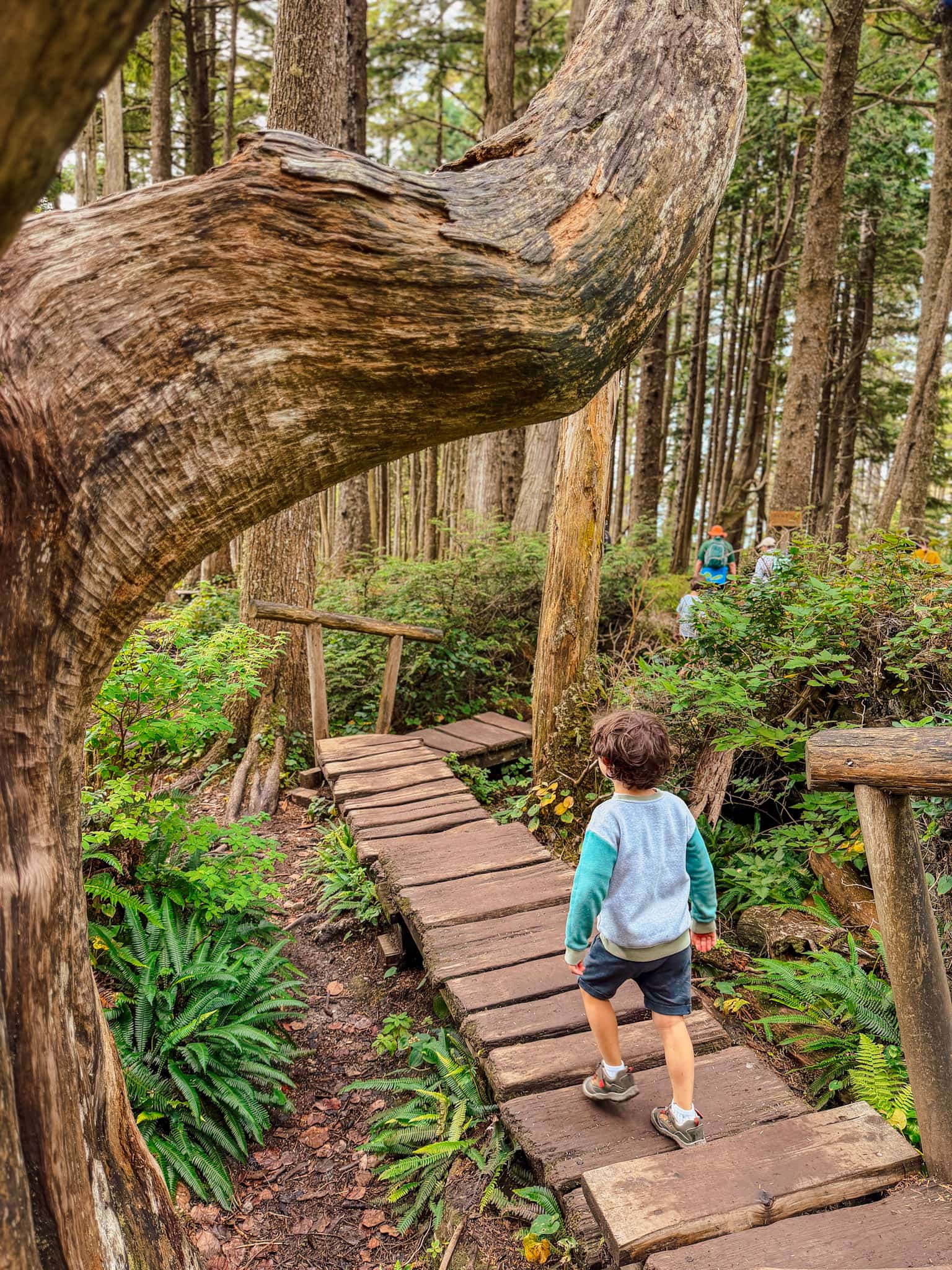
The views here are incredible, and it’s an excellent spot to see wildlife. We spotted sea lions and bald eagles, but you can also spot sea otters, gray and humpback whales and puffins from the lookouts as well.
We love these self focusing binoculars for wildlife spotting!
Since Cape Flattery is located on tribal land, you do need to purchase a $20 Makah Recreation Pass to visit. It’s available to purchase at several of the stores in town, or they have a pay station on your way to the trailhead.
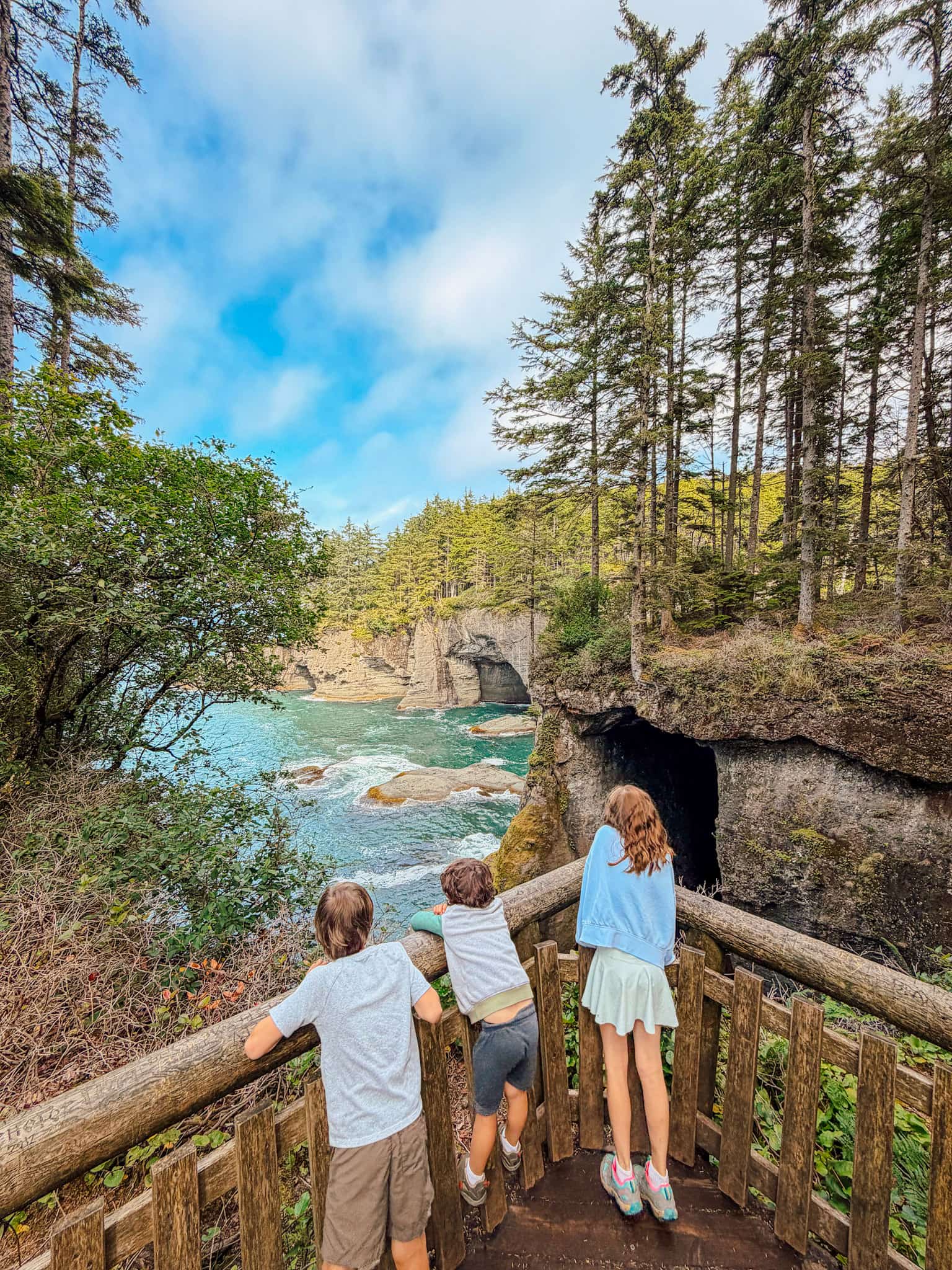
Because Cape Flattery requires driving farther north than many Olympic National Park attractions, it does add a little time to the day. If you have less than three days in the area, this would be one of the first places I would consider skipping.
But if you have the time, I highly recommend a stop here.
Sol Duc Falls
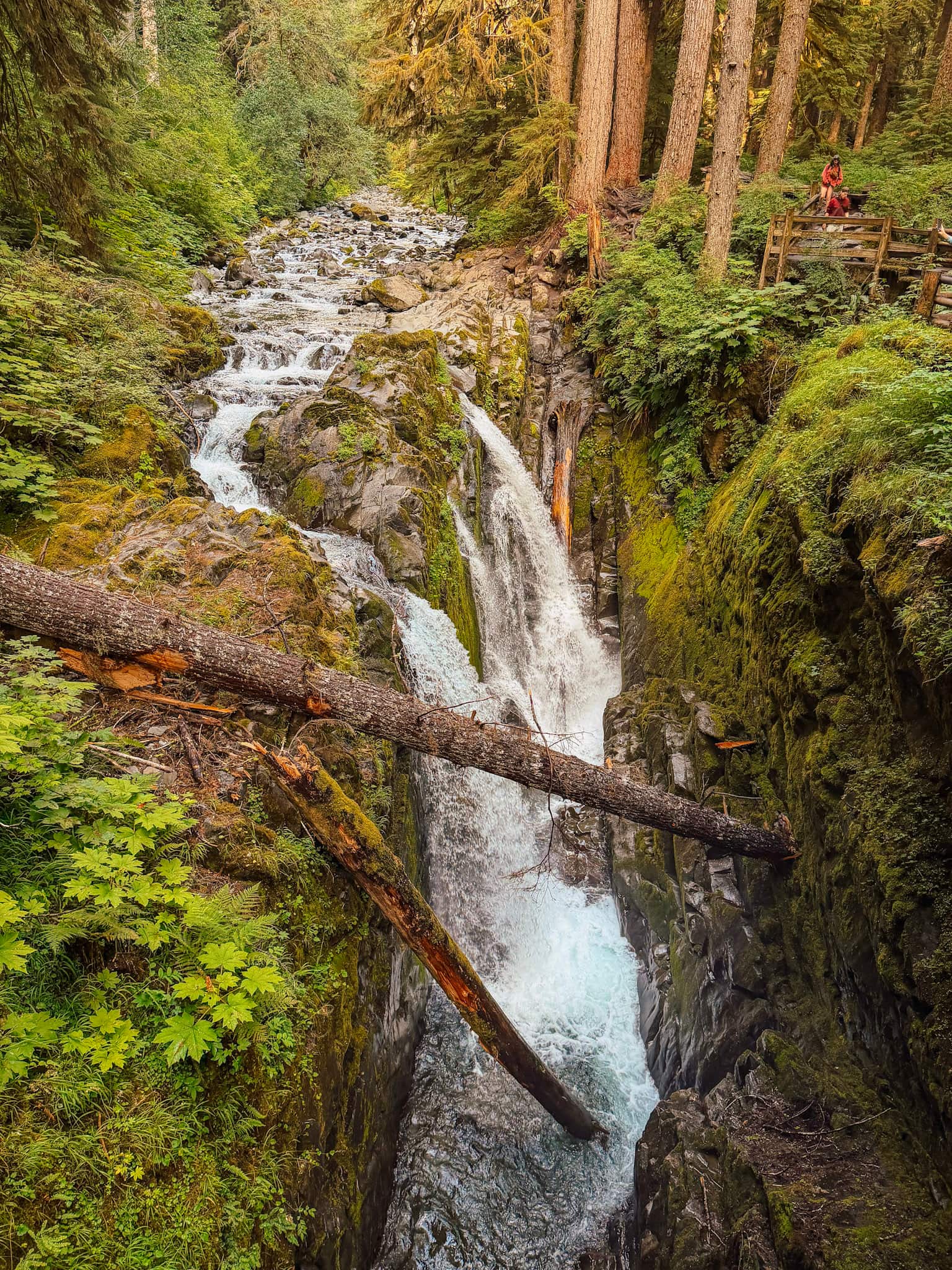
End your day by heading to Sol Duc Falls.
This is such an amazing area to explore in the evening, and visiting around 6 or 7 p.m. will make the trail much quieter than visiting earlier in the day.
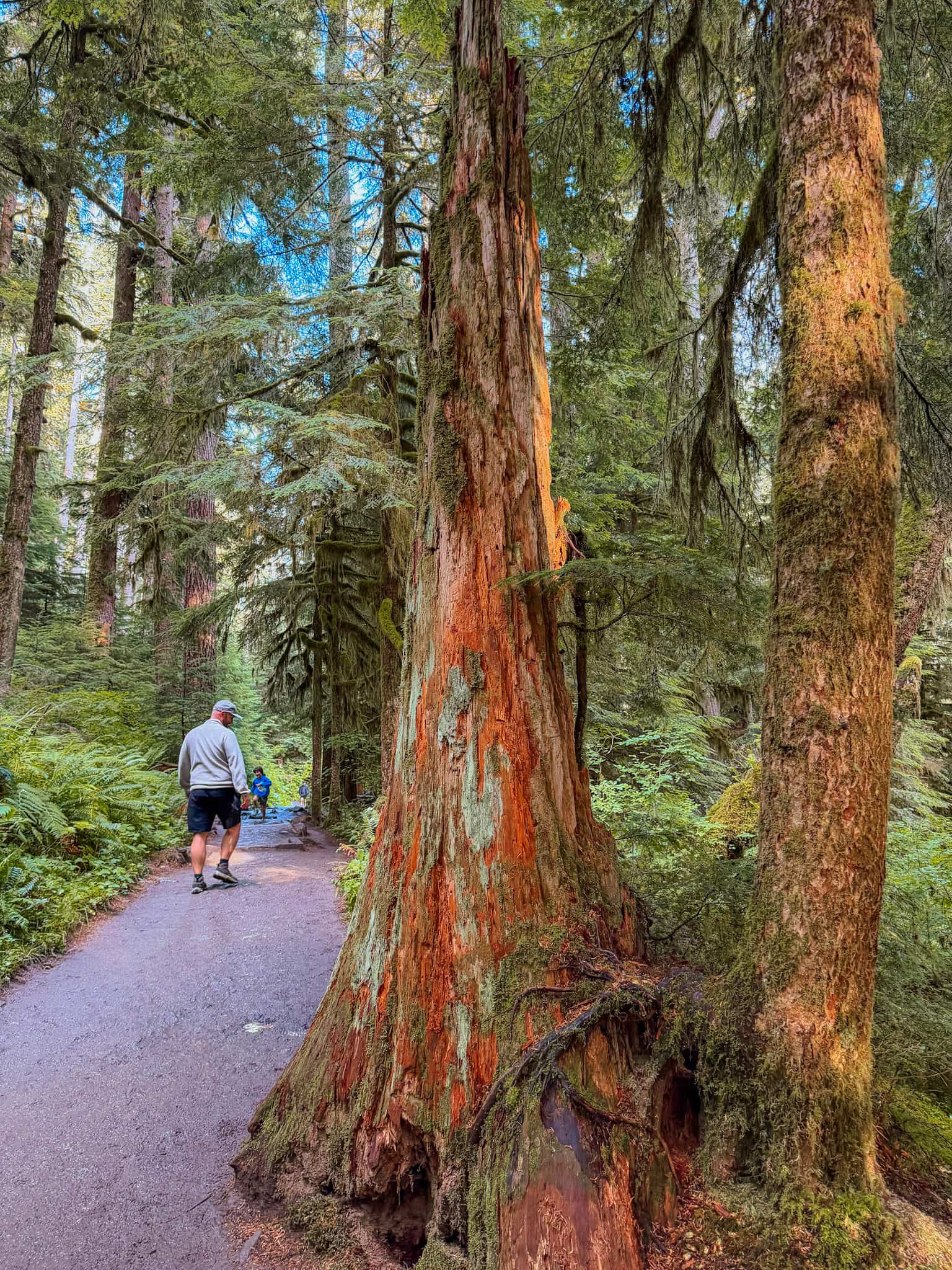
The trail to the falls is just under 2 miles round trip and winds through an amazing old-growth forest before reaching the waterfall.
It’s a fun trail for kids – we spotted several banana slugs here, as well as lots of chipmunks and squirrels.
After your hike, head to either the Sol Duc campground or the Sol Duc Hot Springs Resort for the night.
You could also stay in the nearby town of Port Angeles:
- Quality Inn Port Angeles – free breakfast + ocean view
- Olympic Lodges by Ayres – free breakfast, pool + close to dining and shopping
- Red Lion Hotel Port Angeles – onsite restaurants + pool
If you are looking for a relaxing activity to add to your itinerary, take a dip in the Sol Duc mineral pools during your visit to the area.
Day 3: Tide Pools, Lake Crescent and Hurricane Ridge
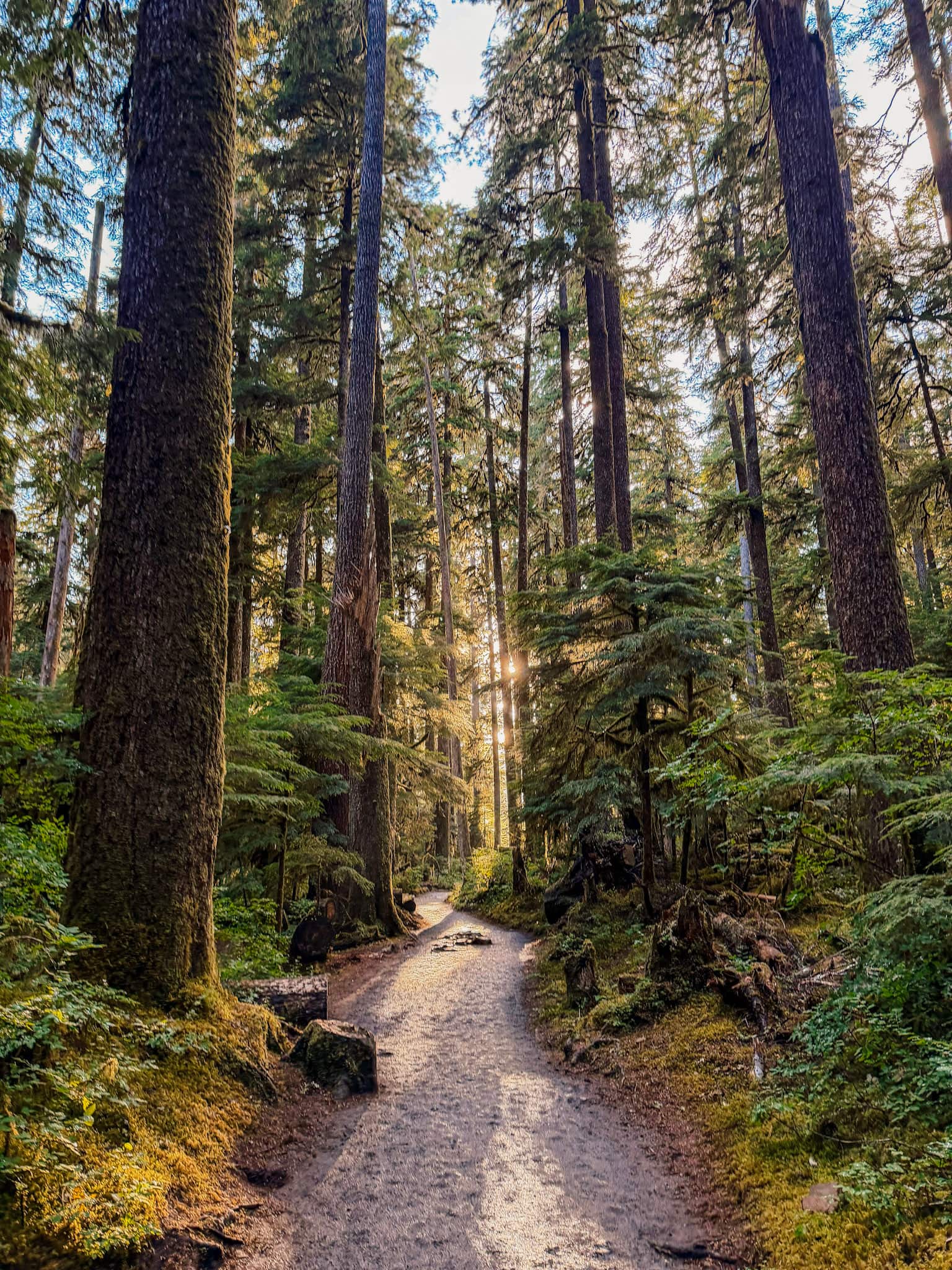
Your final day in Olympic National Park will really remind you just how special of a place it truly is – you will wake up surrounded by lush rain forest, spend the morning tide pooling and watching sea creatures, and end the evening on top of a mountain.
Salt Creek Recreation Area
Start your morning by heading to Salt Creek Recreation Area, making sure to time your visit around low tide.
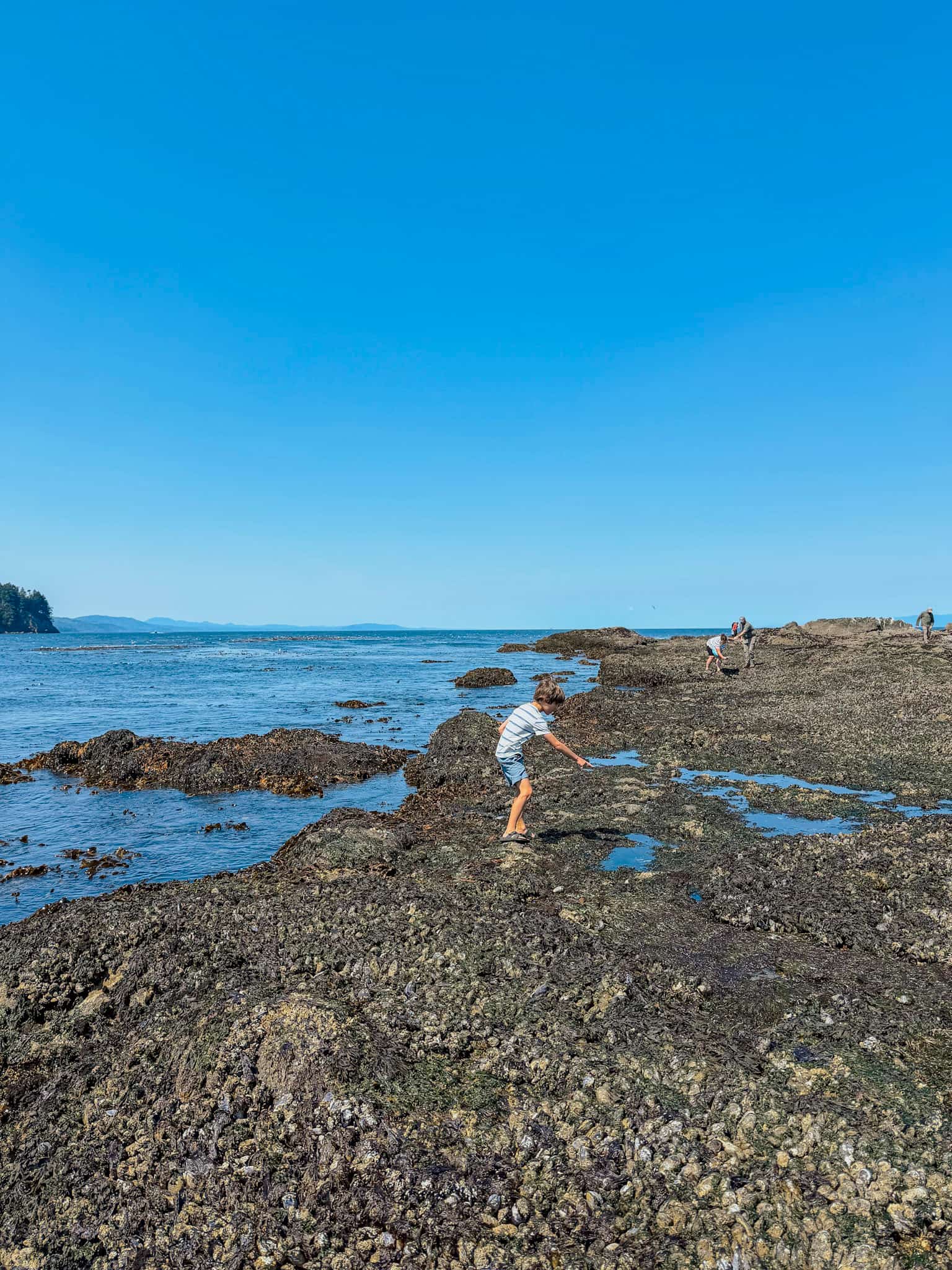
This is such a fantastic place for kids who love looking for marine life. I highly recommend adding a couple of different tide pool spots to your itinerary – the sea creatures you spot at each one are so unique.
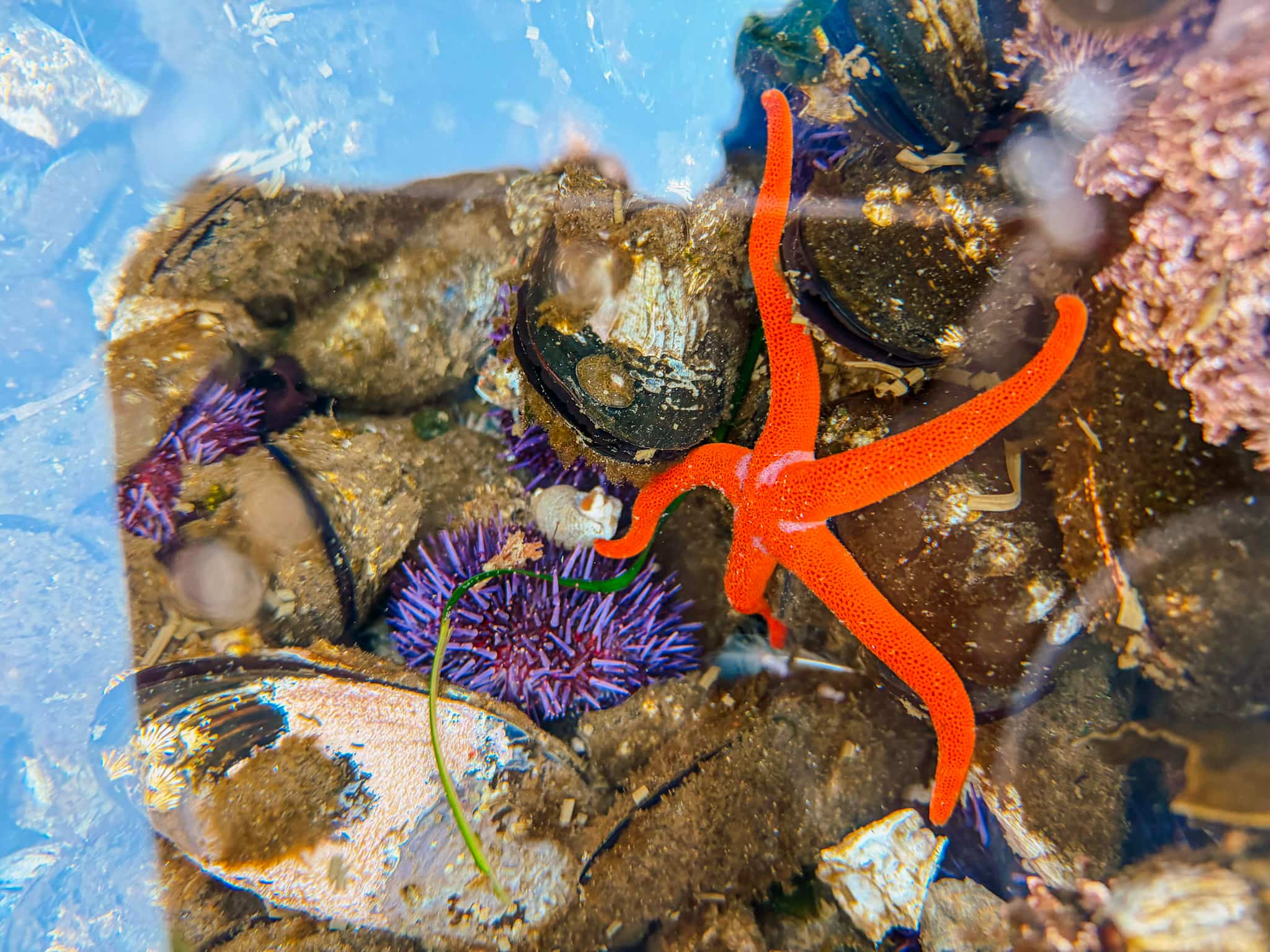
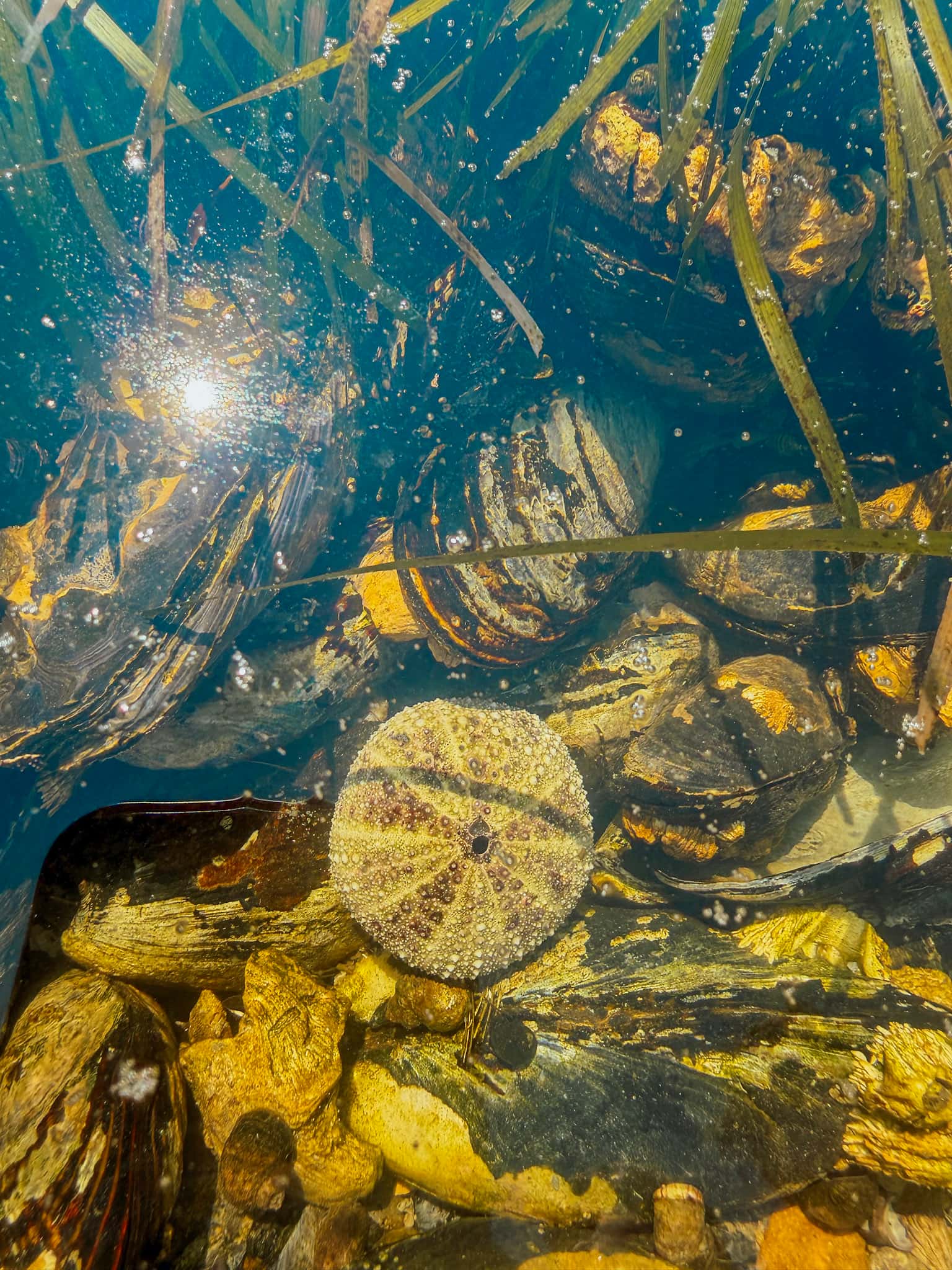
We spent several hours here exploring the tide pools, and they have a great beach and lots of picnic tables open for day use.
Lake Crescent
From Salt Creek, head toward Lake Crescent.
Lake Crescent is a deep, glacially carved lake surrounded by forest and mountains. Its crystal clear water and dramatic setting make it one of the most beautiful places in Olympic National Park.
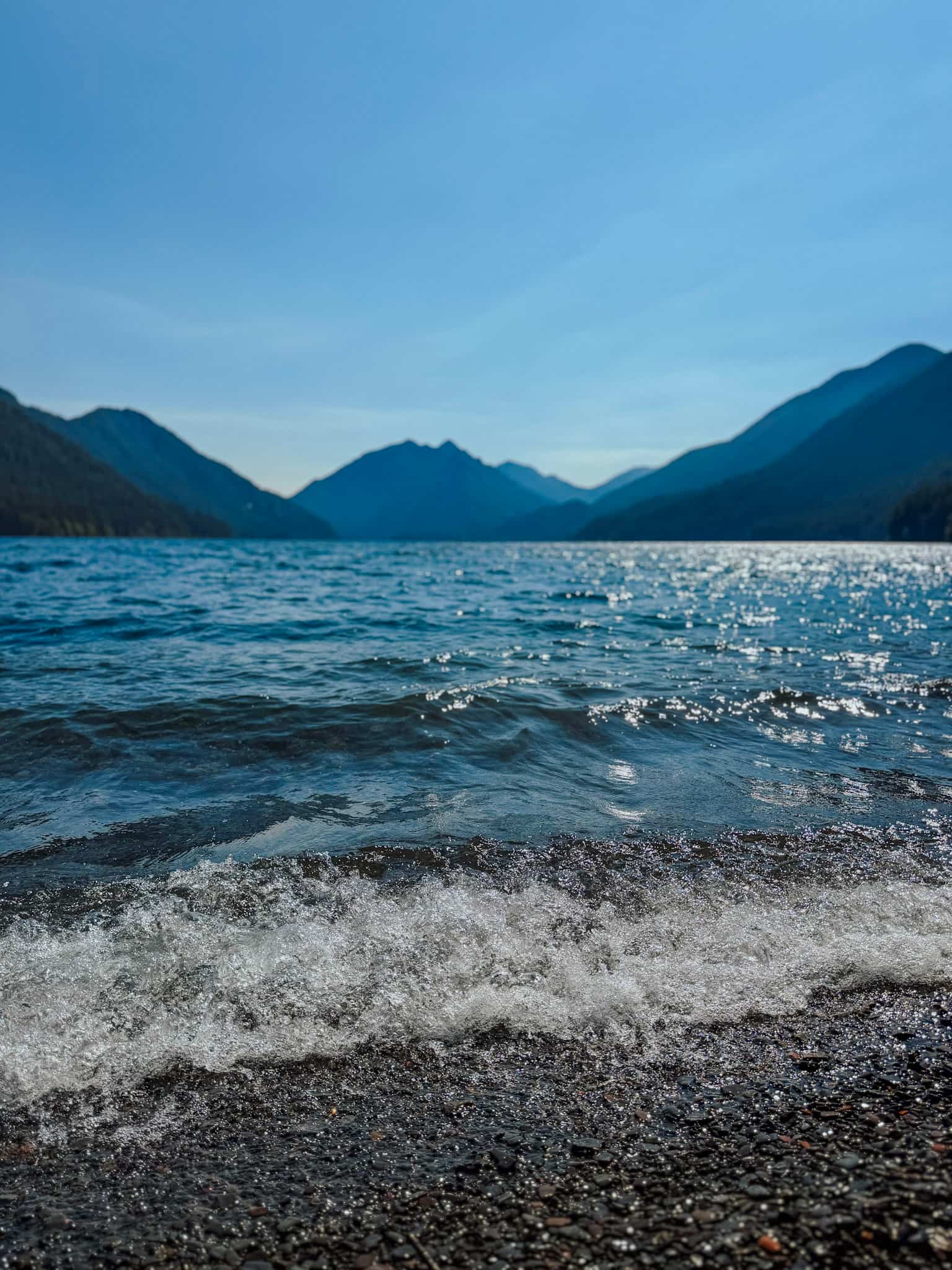
There are several hikes in the Lake Crescent area, some really great beaches, and you can even rent kayaks and get out on the water.
I highly recommend finding a spot to sit and skip rocks, have a picnic and just take in the views.
Devil’s Punchbowl
I also recommend taking a stroll along the Spruce Railroad trail, a 4 mile paved trail that takes you along the northern shore of Lake Crescent. About 1 mile in, you can take a side trail to see Devil’s Punchbowl, a popular swimming and cliff-jumping area.
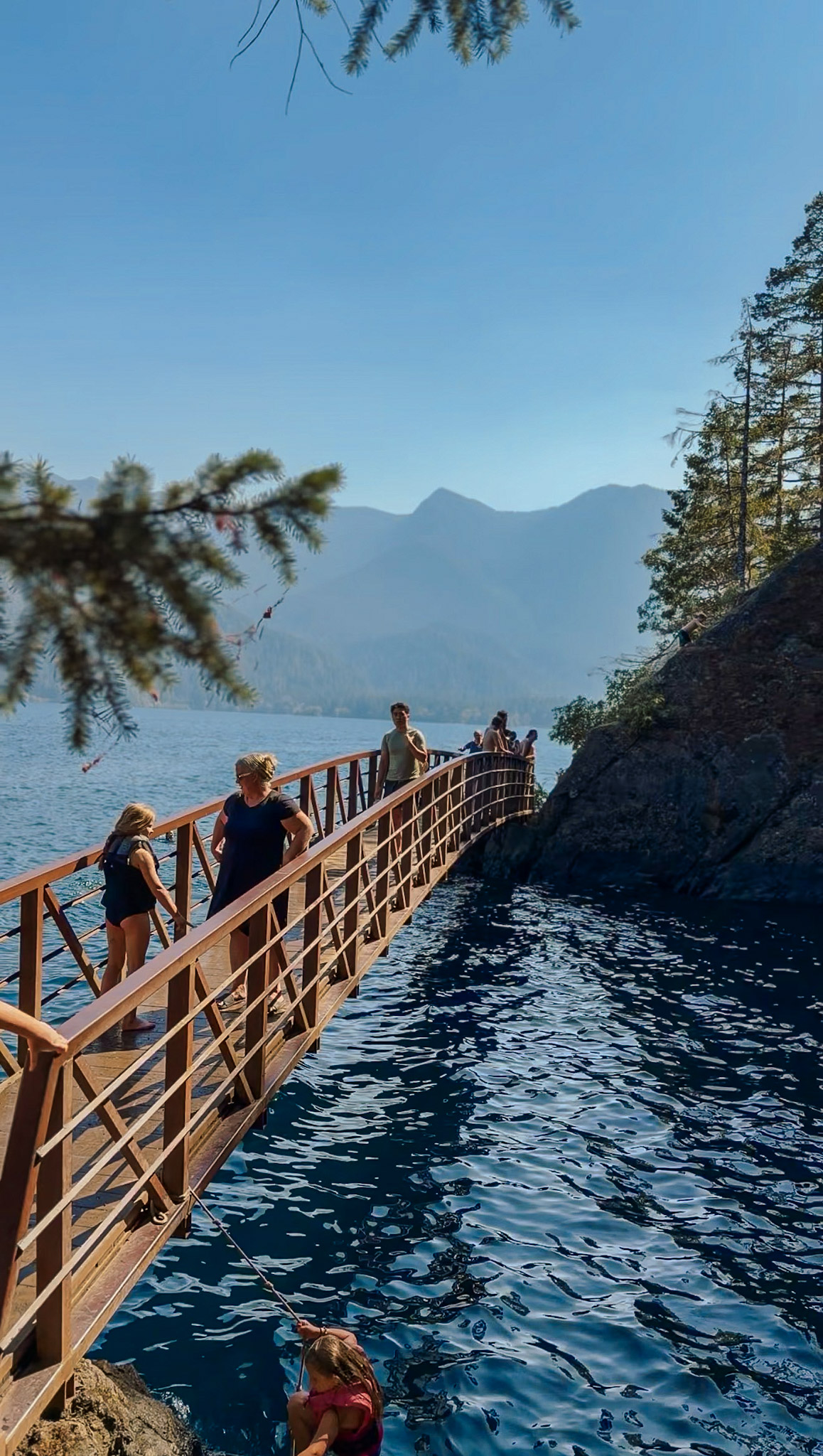
The water is the prettiest shade of blue, but is frigid, so swim at your own risk!
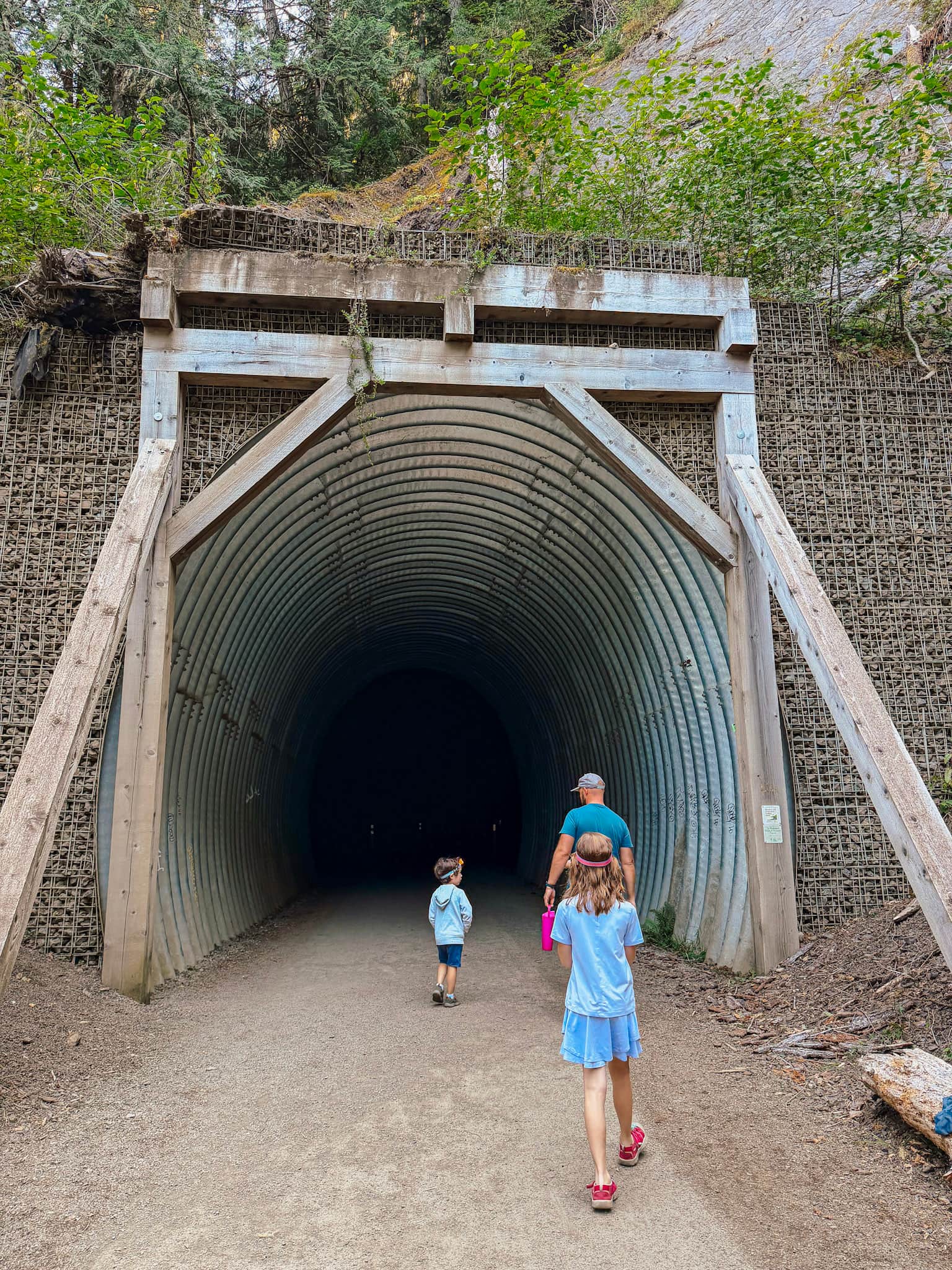
The trail also takes you through some old railroad tunnels, which are so fun for kids to explore. Bring a flashlight or headlamp – the tunnels are dark!
Marymere Falls & Madison Falls
If you have time in your afternoon schedule, make a stop at either Marymere Falls or Madison Falls.
Marymere Falls is access by a short 0.9 mile trail (each way) with moderate elevation gain right at the end, before the trail opens up to a 90-foot waterfall.
Madison Falls is only a 0.2 mile walk from the parking lot with a stunning 50-foot cascading fall at the end, making it an easy spot for families to visit.
Hurricane Ridge
I recommend ending your day at Hurricane Ridge.
Hurricane Ridge is Olympic National Park’s most accessible mountain area and offers panoramic views of the Olympic Mountains. Like Hoh, it’s a popular spot and the parking lot fills fast during peak hours, which is why I recommend ending your day here once the crowds have died down a bit.
As you drive higher up the mountain side, the dense forest gradually gives way to sweeping mountain views.
Keep your eyes open for wildlife along the way!
Once you arrive at the top, there are several trails of different lengths to choose from.
The Big Meadow trail near the Hurricane Ridge area is a great option for families looking for shorter walks – it’s only 0.4 miles and offers panoramic views of the Olympic Mountains.
If you’re looking for something a bit longer or more challenging, I highly recommend the Hurricane Hill trail.
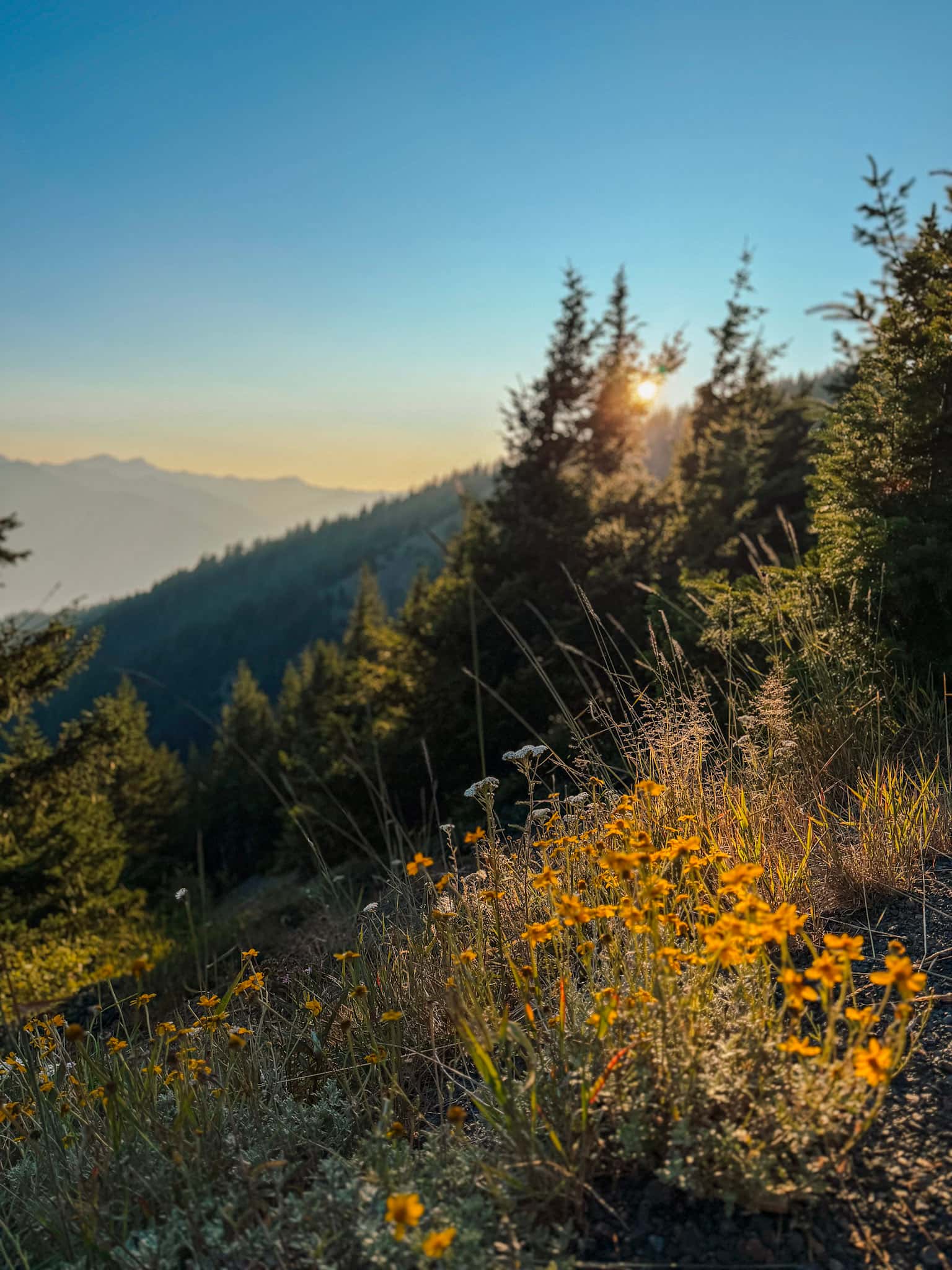
The paved trail is 3.5 miles and offers incredible views of the Olympic Range. You can spot wildlife like deer and marmots, and the wildflowers blooming are so beautiful! Even if you only go part of the way, I highly recommend this trail.
Note: As of May 2023, the Hurricane Hill Visitor’s Center burned down and is no longer open. When we visited in summer of 2026, there were restrooms and a small make-shift gift shop at the top, but no official Visitor’s Center rebuilt yet. There is another Visitor’s Center located near the entrance to Hurricane Ridge in Port Angeles.
Where to Stay in Olympic National Park With Kids
One of the most important decisions you’ll make when planning your Olympic National Park itinerary is where to stay.
Because the park is so spread out, there isn’t one central hotel or campground that puts you close to everything.
If you plan to spend three days or longer exploring Olympic National Park, I recommend changing accommodations to stay on opposite sides of the park halfway through.
For our trip, we stayed at:
- Hoh Rainforest Campground
- Sol Duc Campground
This allowed us to wake up close to – or already in – the areas we planned to explore rather than spending hours driving first thing in the morning.
If camping isn’t your thing, I would split your stay between Forks and Port Angeles.
Stay in Forks or Kalaloch for close access to Hoh Rainforest and Pacific Coast
- Pacific Inn Motel – basic, affordable motel in nearby Forks
- Quileute Oceanside Resort – stunning ocean views, full kitchen + living area
- Misty Valley Inn – family rooms + beautiful outdoor area
Stay in Port Angeles for easy access to Hurricane Ridge and Lake Crescent
- Red Lion Hotel Port Angeles – onsite restaurants + pool
- Olympic Lodges by Ayres – free breakfast, pool + close to dining and shopping
- Quality Inn Port Angeles – free breakfast + ocean view
How Many Days Do You Need in Olympic National Park?
I would recommend at least three days.
That gives you enough time to experience the rainforest, coast, and mountains without trying to see everything in one day. And trust me, you definitely want to experience all three ecosystems.
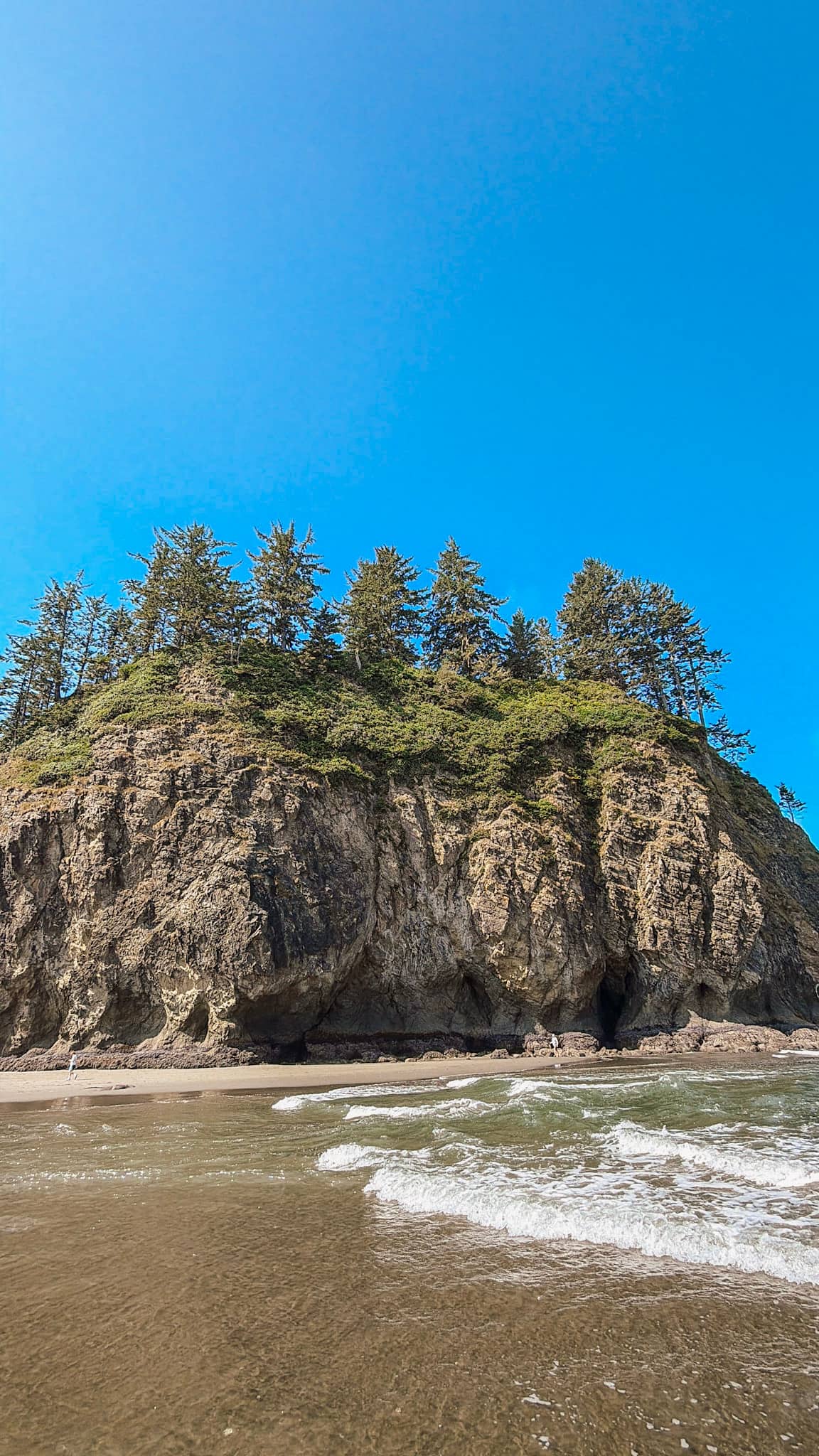
If you only have 2 days, I would recommend splitting your time between the Hoh / one of the beaches, and then Crescent Lake and Hurricane Ridge.
If you have four or five days, take your time and explore some of the other beaches, like Rialto or Third beach. Hike some of the lesser known trails, and really experience the beauty and uniqueness of this park.
Tips for Visiting Olympic National Park With Kids
Check the Weather Daily
Olympic National Park’s weather can change quickly, especially when you’re moving between the coast, rainforest, and mountains.
Bring layers and rain gear, even if the forecast looks promising. We visited at the end of July and I didn’t bring any pants – but we sure wished we had them on those coastal days!
Download Maps Before Entering the Park
Cell service can be limited throughout Olympic National Park.
Download Google maps along with the National Park Service maps before you arrive.
I also recommend downloading Olympic National park Guide Along tour before you go – you don’t want to drive through a national park without it!
Don’t Try to See Everything
This was probably the hardest part of planning our trip.
There is so much to see, it’s really hard to narrow down the list! If you are limited on time, I recommend picking 1 spot to explore from each of the 3 different ecosystems – rainforest, mountains and Pacific coastline.
Is Olympic National Park Worth Visiting With Kids?
Without a doubt.
Olympic National Park ended up being one of our favorite parts of our Washington and Oregon road trip, and it might just be my favorite national park we’ve visited so far.
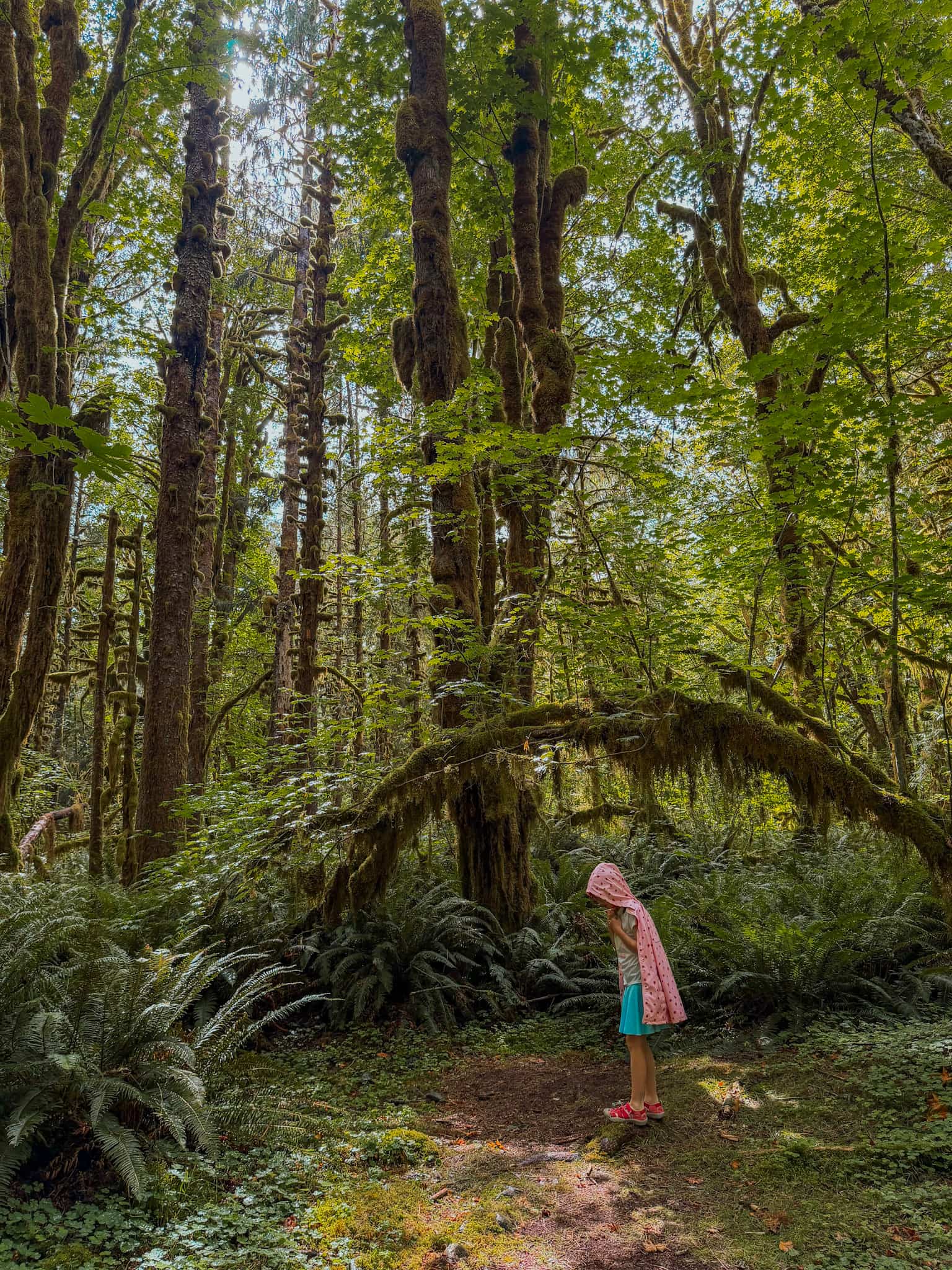
The variety here is what makes this place so special. It’s hard to think of another spot in the US where you can walk through a temperate rainforest in the morning, explore tide pools in the afternoon, and finish the day surrounded by mountain views.
And while the park is enormous, many of its most memorable experiences are surprisingly accessible for families.
You don’t have to hike 10 miles to find something incredible here. Short trails to the beach where you get to watch your kiddo hold a hermit crab, or searching for banana slugs during your stroll through the rainforest – these are the moments that make Olympic National Park feel truly incredible.
If you’re planning a Pacific Northwest family road trip, I would definitely prioritize Olympic National Park on your itinerary.
Planning Your Olympic National Park Family Vacation
If you’re planning a larger Pacific Northwest road trip, Olympic National Park fits perfectly into a route that also includes the Oregon Coast, North Cascades National Park and Mount Rainier National Park.
We visited Olympic National Park during our 10-day Washington and Oregon campervan road trip, traveling north from the Oregon Coast before continuing toward Whidbey Island and North Cascades National Park.
It truly was the trip of a lifetime – and I already can’t wait to plan our next trip back.
Read next: Our 10-Day Washington & Oregon Road Trip Itinerary
For more help planning your Olympic National Park family vacation, check out these guides: