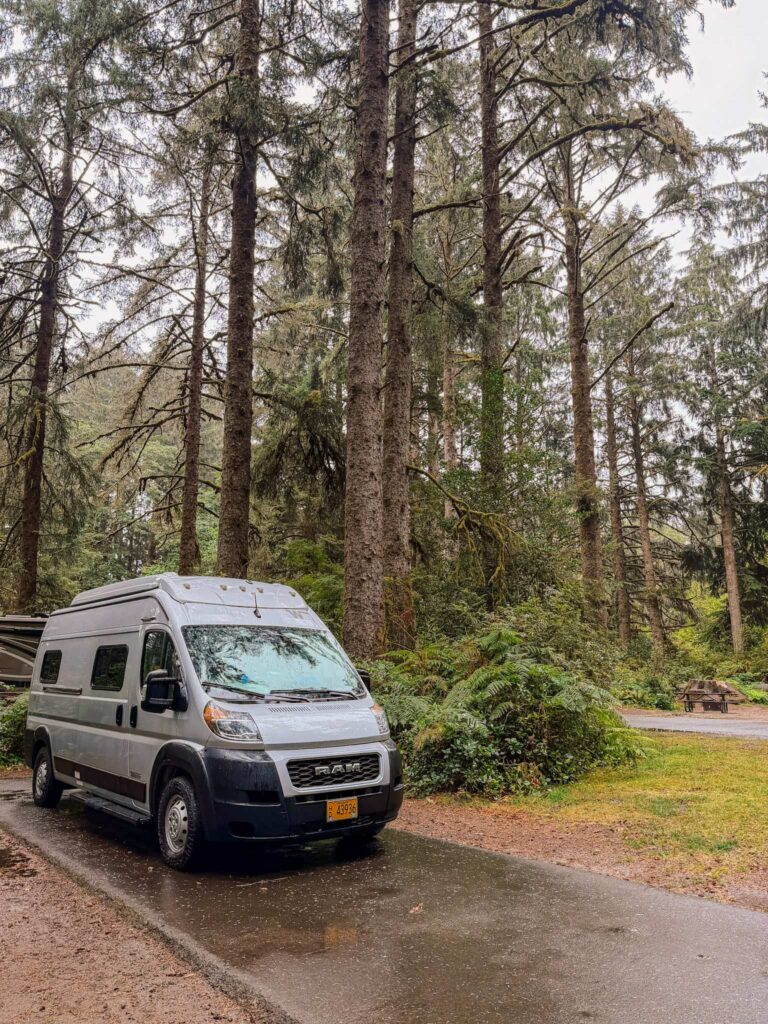
What It’s Really Like Taking a Campervan Road Trip through Washington & Oregon as a Family of 5
If you read our 10-Day Washington & Oregon Road Trip Itinerary, you already know that our trip through the Pacific Northwest was one of our absolute favorite family adventures to date. The mossy rainforests, towering sea stacks, and winding mountain roads are the exact kind of scenery that makes you want to pack up your family and never come back to the real world.
But let’s be totally honest for a minute: spending 10 nights on a campervan road trip with three kids contains a lot of logistics.
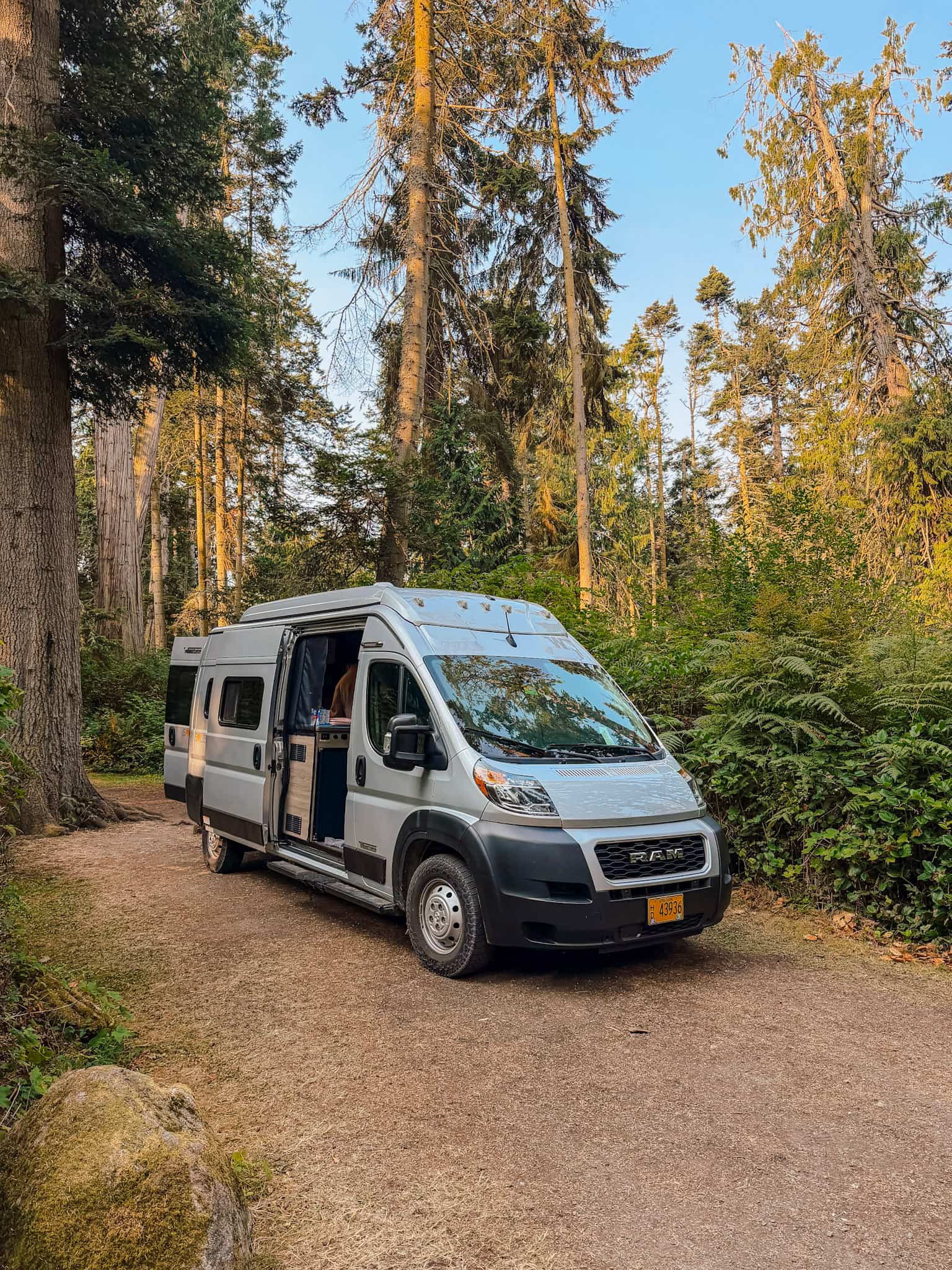
Before this trip, I spent months staring at hotel costs, rental cars, and our itinerary trying to figure out how to make this trip work without losing my mind (or our entire savings). That’s when we landed on the idea of renting a campervan.
If you’ve ever scrolled through Instagram and seen dreamy photos of families sipping coffee out of their RV or campervan while staring at the ocean, you’ve probably wondered… is it actually like that? Or is it just crammed, chaotic, and messy?
Here is the raw, practical, and honest breakdown of what it’s really like to take a campervan road trip through Washington and Oregon as a family of five.
Why We Picked a Campervan Over the Traditional Hotel + Rental Car Route
When I first started drafting the itinerary for our Pacific Northwest trip, I naturally fell back on the classic family road trip formula: book a rental car, reserve a string of hotels along our route, and drive, changing our sleeping accommodations nightly.
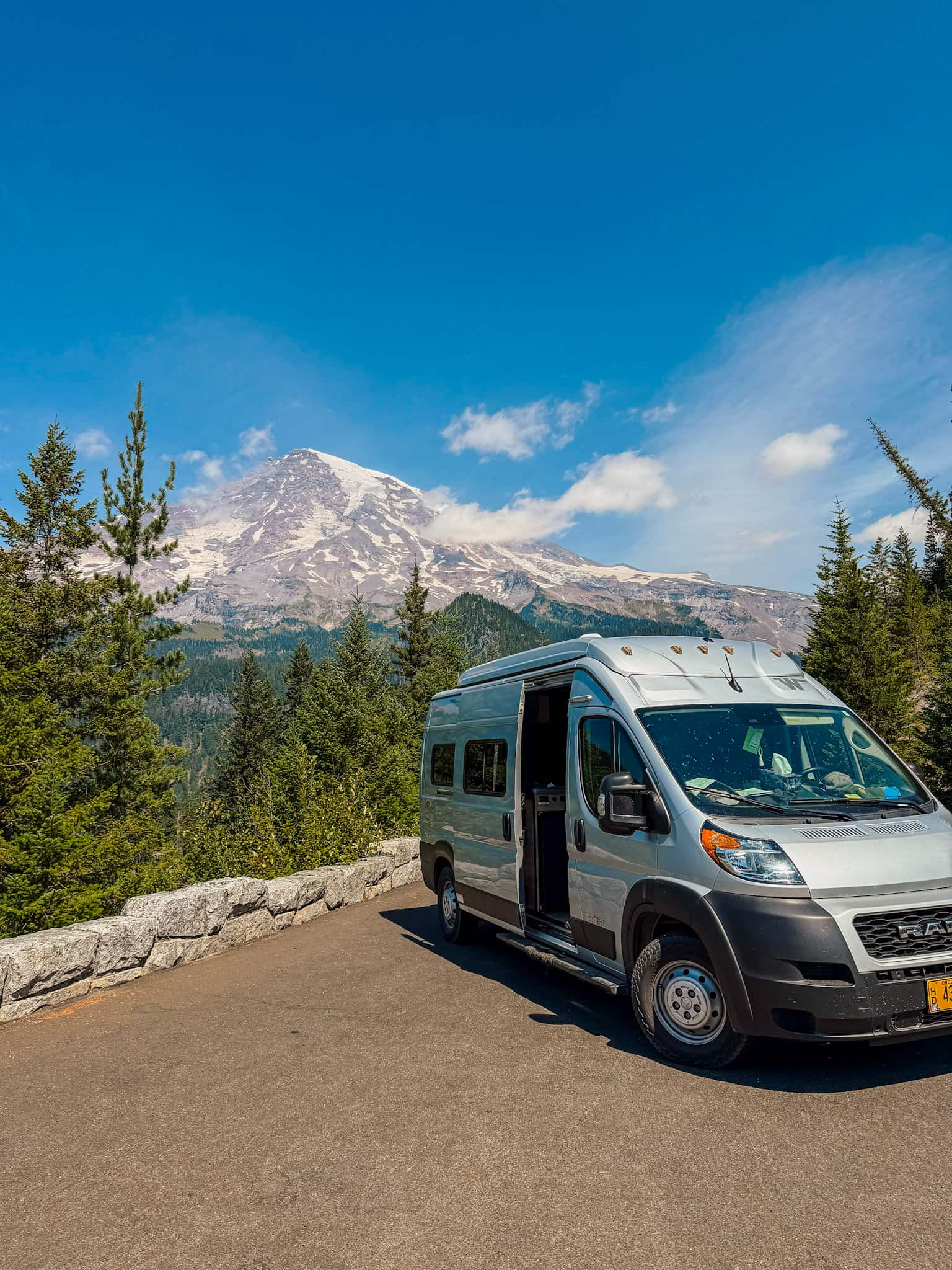
It only took a few hours of crunching numbers and staring at Google Maps to realize that plan was going to be a total headache for this specific region.
Here’s why the traditional hotel and rental car route didn’t make sense for us:
1. The “Packing & Unpacking” Exhaustion
A PNW road trip covering Washington and Oregon involves a lot of moving parts. Because we were exploring all of the Washington National Parks plus the Oregon coast, staying in one central location wasn’t an option—we would have spent hours driving in circles every day.
That meant booking a different hotel almost every single night over a 10-day span. Which also meant packing up suitcases, hunting down missing shoes, hauling luggage back and forth every single day, and praying we don’t leave anything important behind. It takes a huge chunk of time out of your day that could be spent on a trail or at the beach.
2. Peak Season PNW Hotel Prices Are Not So Budget Friendly
If you’ve ever tried booking a family-sized hotel room or VRBO anywhere near Cannon Beach, Olympic National Park, or the Oregon Coast during peak summer months, you know the sticker shock is real. Standard, basic hotels were easily running $300 to $450+ per night. Multiply that by 10 nights—plus a our minivan rental, gas, and eating three meals a day out at restaurants as a family of 5 —and the cost was exploding fast.
Not to mention, the lack of hotel options in the National Parks are very limited. By renting a home on wheels, we were able to stay in the heart of the parks, rather than outside in a nearby city.
3. Absolute Freedom & Zero Rigid Schedules
With kids, rigid hotel itineraries can backfire. If someone takes an unexpected nap, gets motion sick, or wants to stay an extra two hours playing in the tide pools at Ruby Beach, a strict hotel reservation timeline can force you to feel rushed.
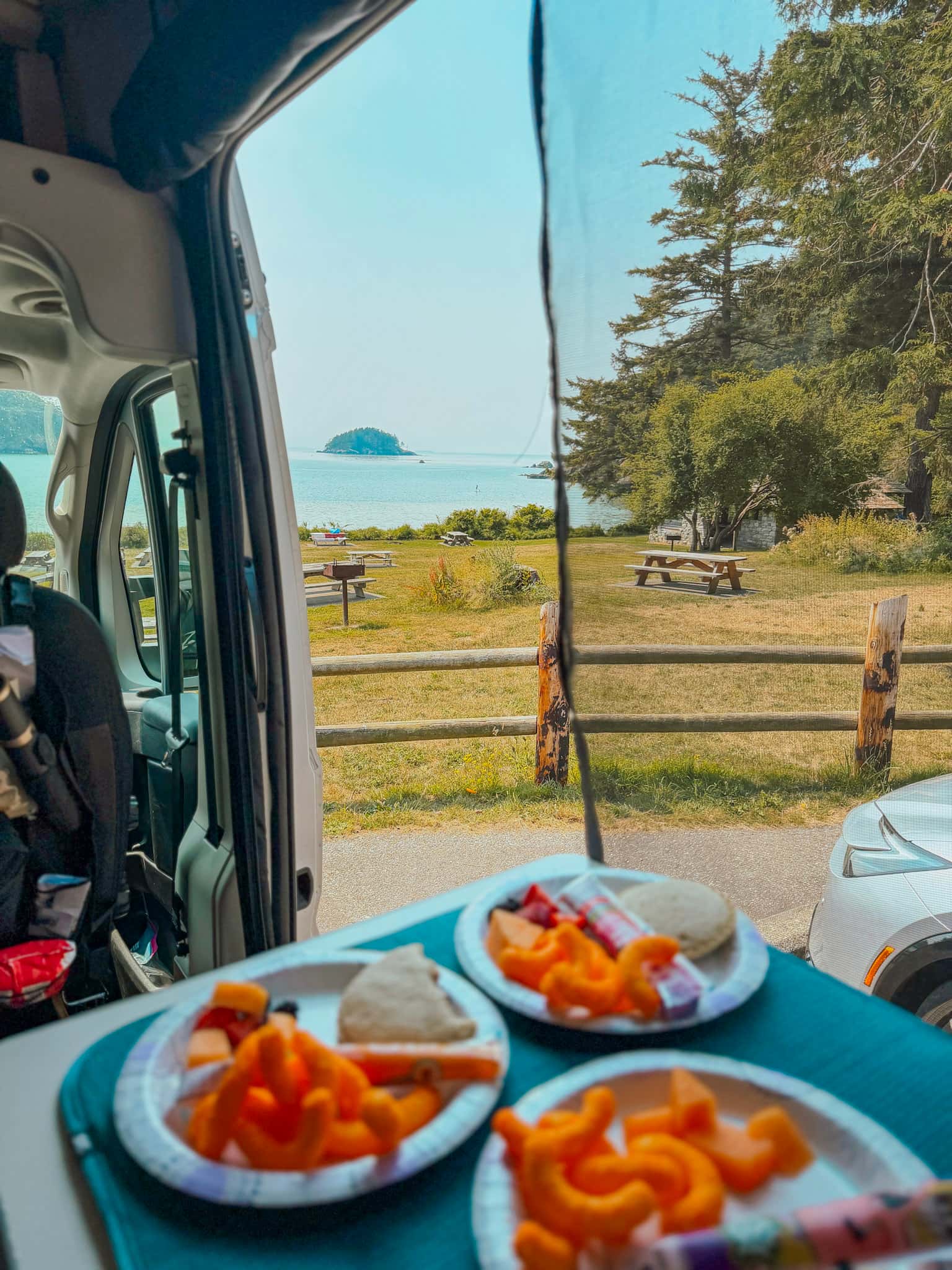
We loved the idea that a campervan acted as a flexible safety net. If we fell in love with a coastal spot, we could linger without worrying about making it to a hotel check-in desk 3 hours away before the lobby closed. At one point during our trip, we needed to pivot our itinerary due to unsafe air conditions related to nearby wildfires. Instead of being out hundreds of dollars for a hotel room, we lost $20 for our state park campsite, and were able to grab a last minute spot for about the same.
Having our “room” already attached to our bumper gave us the ultimate freedom to slow down and actually enjoy the trip.
Why We Rented a Campervan versus a Traditional RV
Once we settled on renting a home on wheels rather than doing the more traditional hotel stays for our specific Washington + Oregon road trip, my first thought was to rent a standard class C motorhome.
As a family of five, having enough space to actually enjoy our trip and not feel like we were living on top of one another was huge for us. But as I started mapping out our route and thinking about the logistics of visiting 3 National Parks — all of which are quite popular – I decided a 30 foot RV might not be the best choice for us camper newbies.
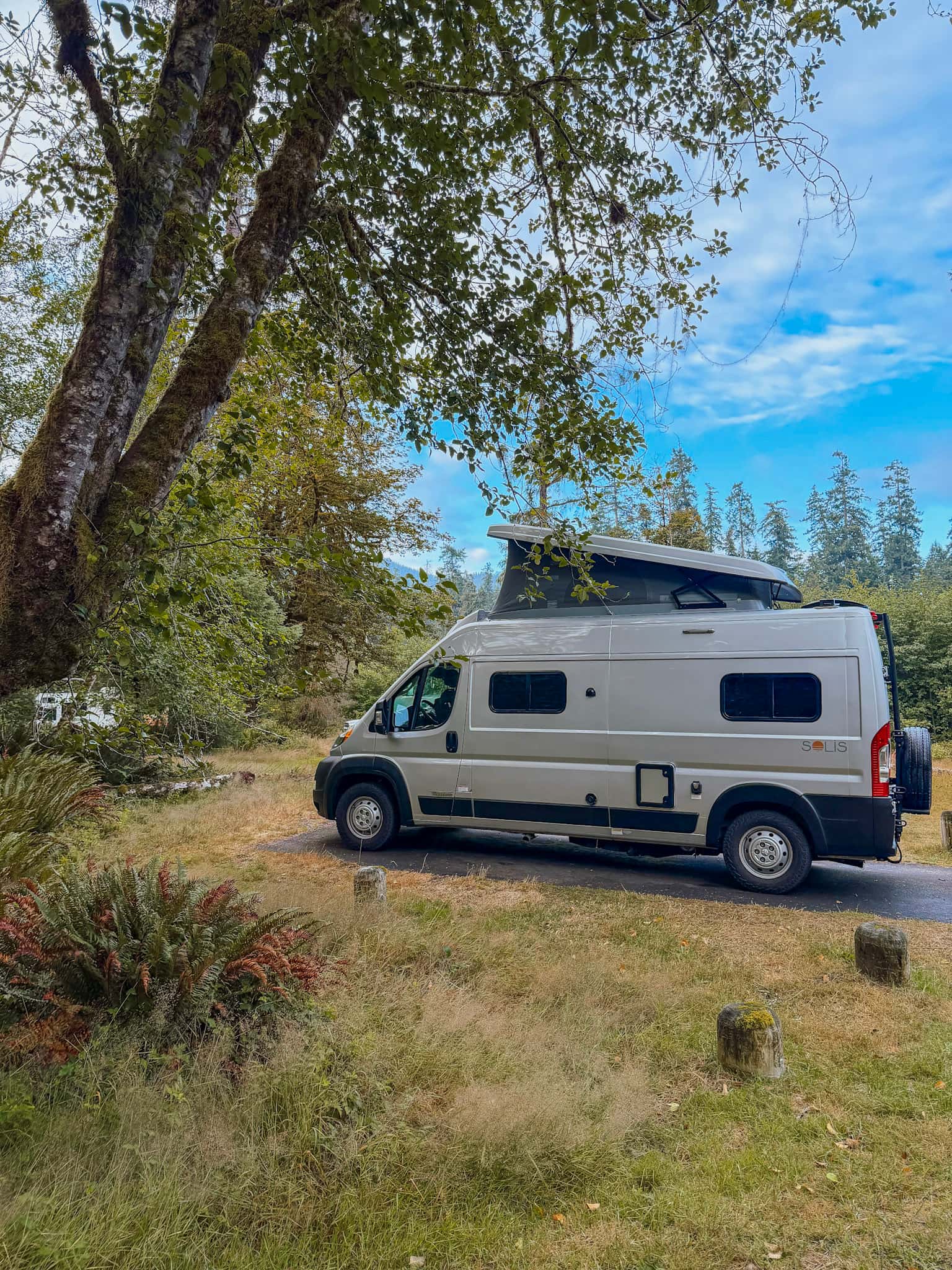
Between navigating tight mountain curves, winding turnouts along Highway 101, and fighting tooth and nail for a parking spot at every Visitor’s Center or popular trailhead —we realized that a campervan was probably a much better choice.
A campervan offered the ultimate middle ground:
- Driveability: It drives much more like an SUV or passenger van than a bus.
- Flexibility: We could easily pull into standard parking spots at trailheads, scenic overlooks, and grocery stores. This was huge!!
- The “Home on Wheels” Factor: Having our beds, kitchen, and gear with us everywhere meant we didn’t have to pack and unpack suitcases at a new hotel every single night.
For a fast-moving PNW itinerary where you’re covering a lot of ground, the campervan was hands-down the most efficient way to travel.
Why We Chose Outdoorsy
We ended up booking our rig through Outdoorsy, which is essentially the Airbnb of RV and campervan rentals.
What I loved about using Outdoorsy was the ability to rent directly from local owners who know the area and equip their vans specifically for PNW travel. We were able to filter specifically for family vans, view the layout and amenities offered, read reviews from other travelers, and filter for things that were non-negotiable, like child-seat safety anchors and a mini-fridge.
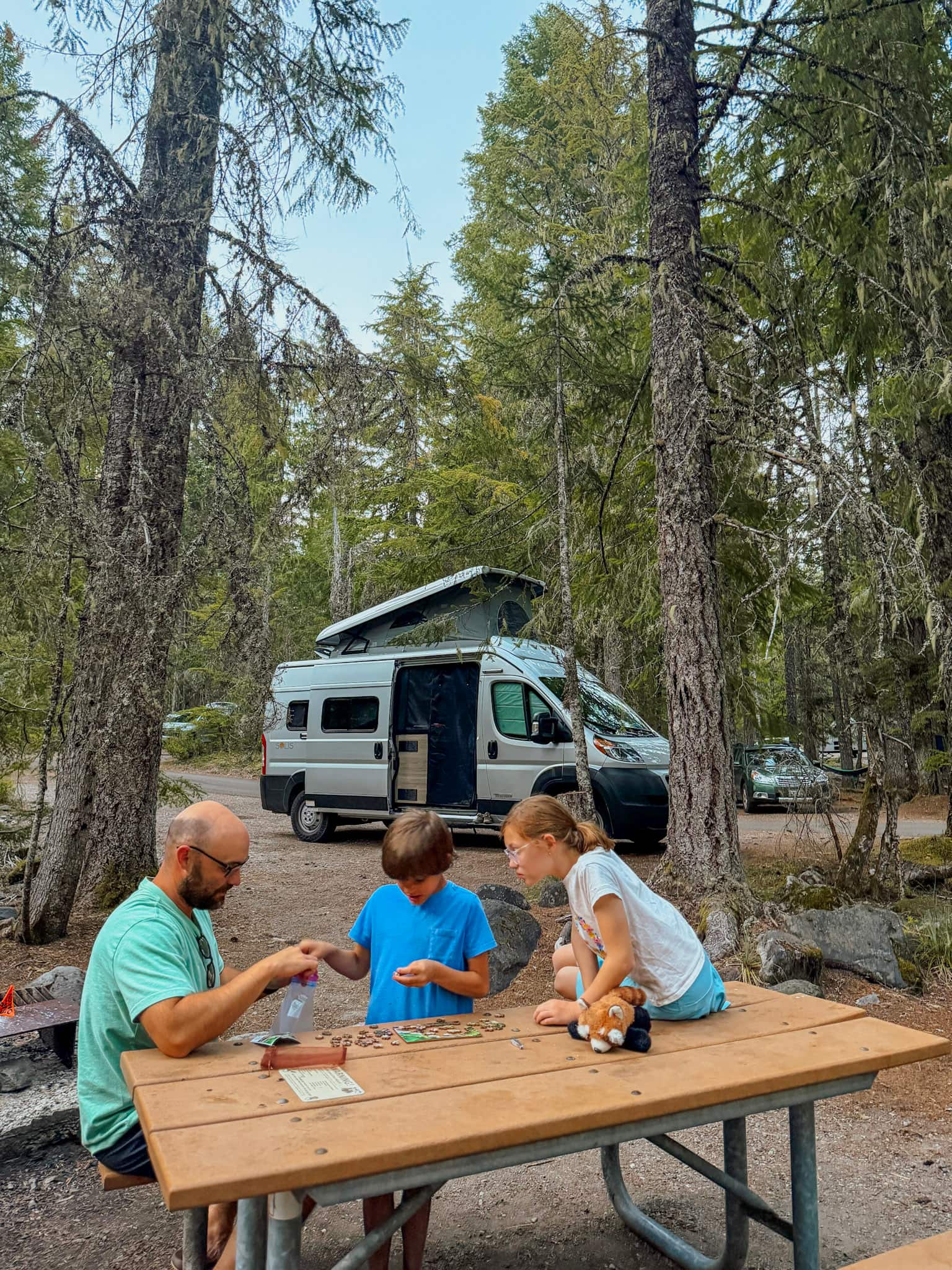
The van we ended up with was a perfect fit for our family of 5, and had everything we needed for our campervan road trip.
What Our Campervan Was Like & Traveling as a Family of 5
Let’s talk about the space, because this is the number one question I’m sure every other parent out there is thinking: How on earth did five of you fit live in a van for 10 days?
One of the most important things about this was that we picked a van that would fit our families needs. We had to have seating and sleeping space for 5, plus we wanted a kitchen so we could cook and store food. Picking a vehicle that fit the needs of our family for this specific trip made all the difference.
Was it cozy? Absolutely. You have to be comfortable being in close quarters with your family for this to work. Our kids were 9, 7 and 5 at the time of our trip, and they still think we are pretty cool and didn’t mind have zero personal space. Now if you have teens who can’t stand to be in the same room as you for more than 10 minutes, this might not best choice for your family.
Sleeping Arrangements
The secret to campervan travel with three kids is establishing a nighttime system early.
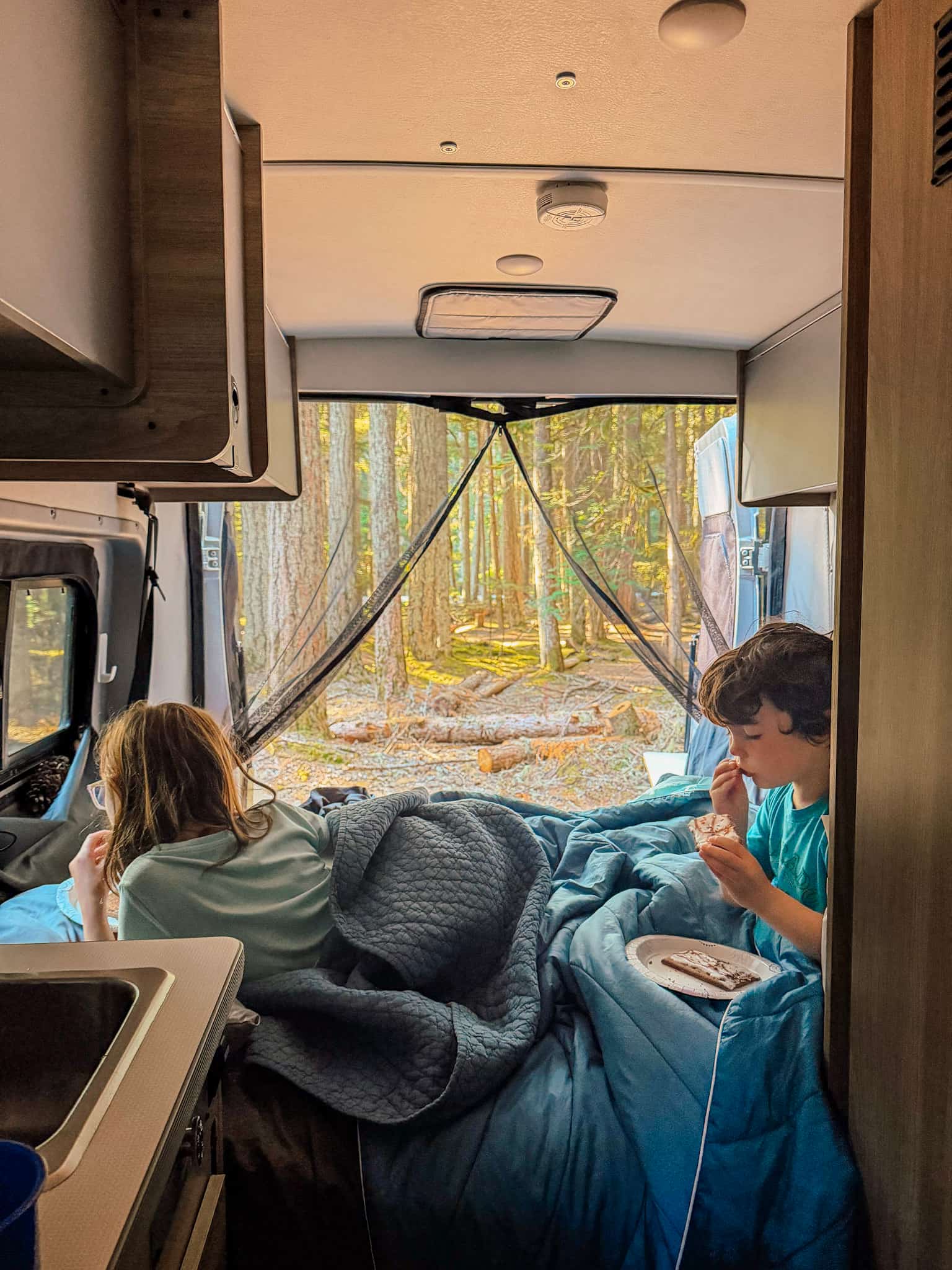
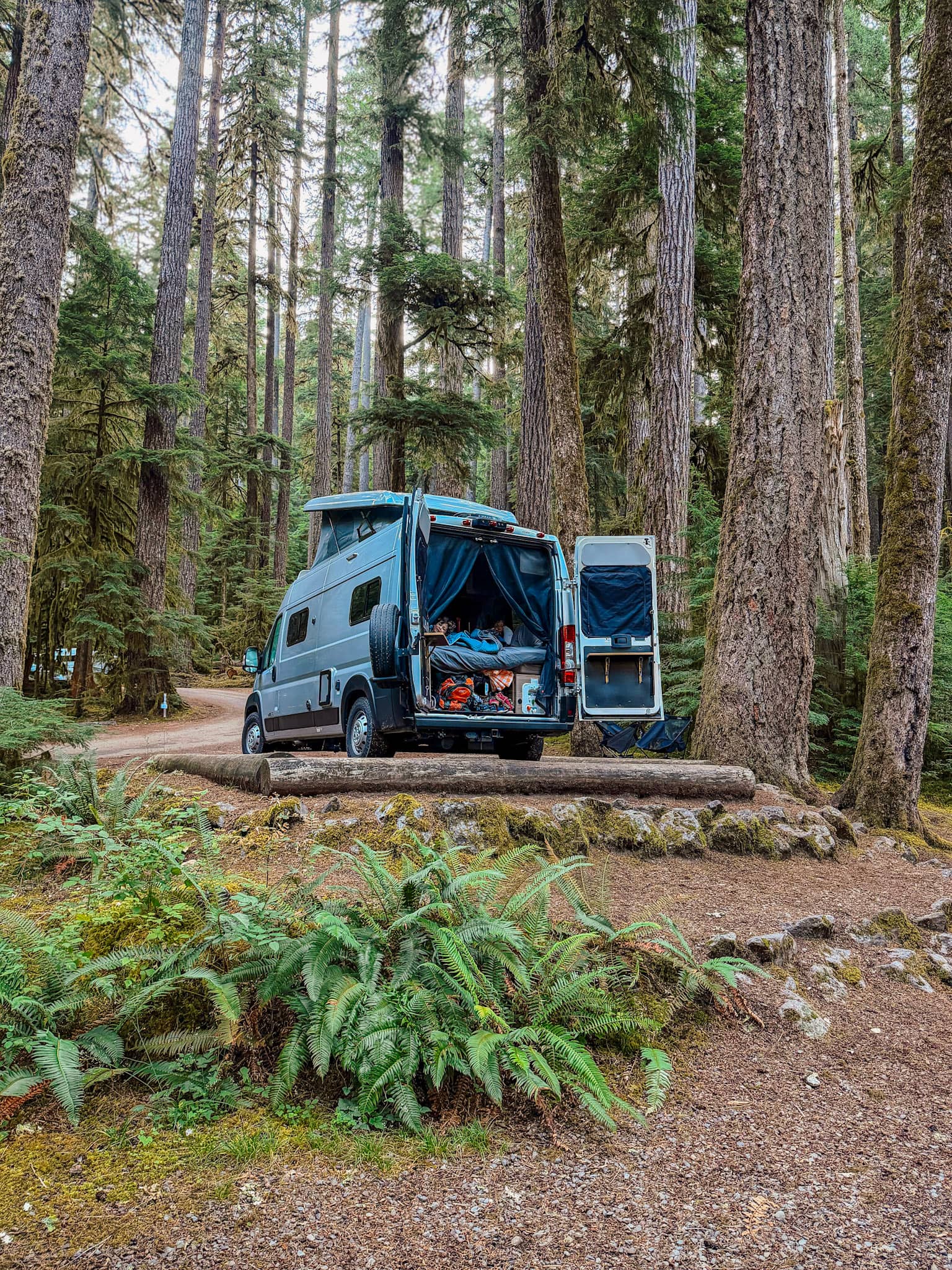
- The Kids: Two of our kids slept up top in the pop-top roof tent. They thought it was the coolest thing in the world—like a treehouse on top of the van. It was fully enclosed, zip-shielded from wind, and actually really comfortable and spacious.
- Mom, Dad, & Kid #3: The main cabin converted into a large lower bed area where my husband and I slept with our youngest in between. Was it the most comfortable? Not even close. But it was fine, and we figured out how to maximize space in the bed quickly on.
Parent Reality Check: Sleeping in a campervan means bedtime happens all at once. There’s no “closing the bedroom door” to watch TV while the kids sleep. Once the lights were off, we were all in for the night! We brought cozy blankies, clip on lights, and sound machines, which helped everyone sleep like rocks after long days of exploring.
Cooking Almost Every Meal on the Road
Food can easily become one of the biggest expenses on a 10-day family trip. Having a mini kitchen on wheels was a game-changer for our food budget.
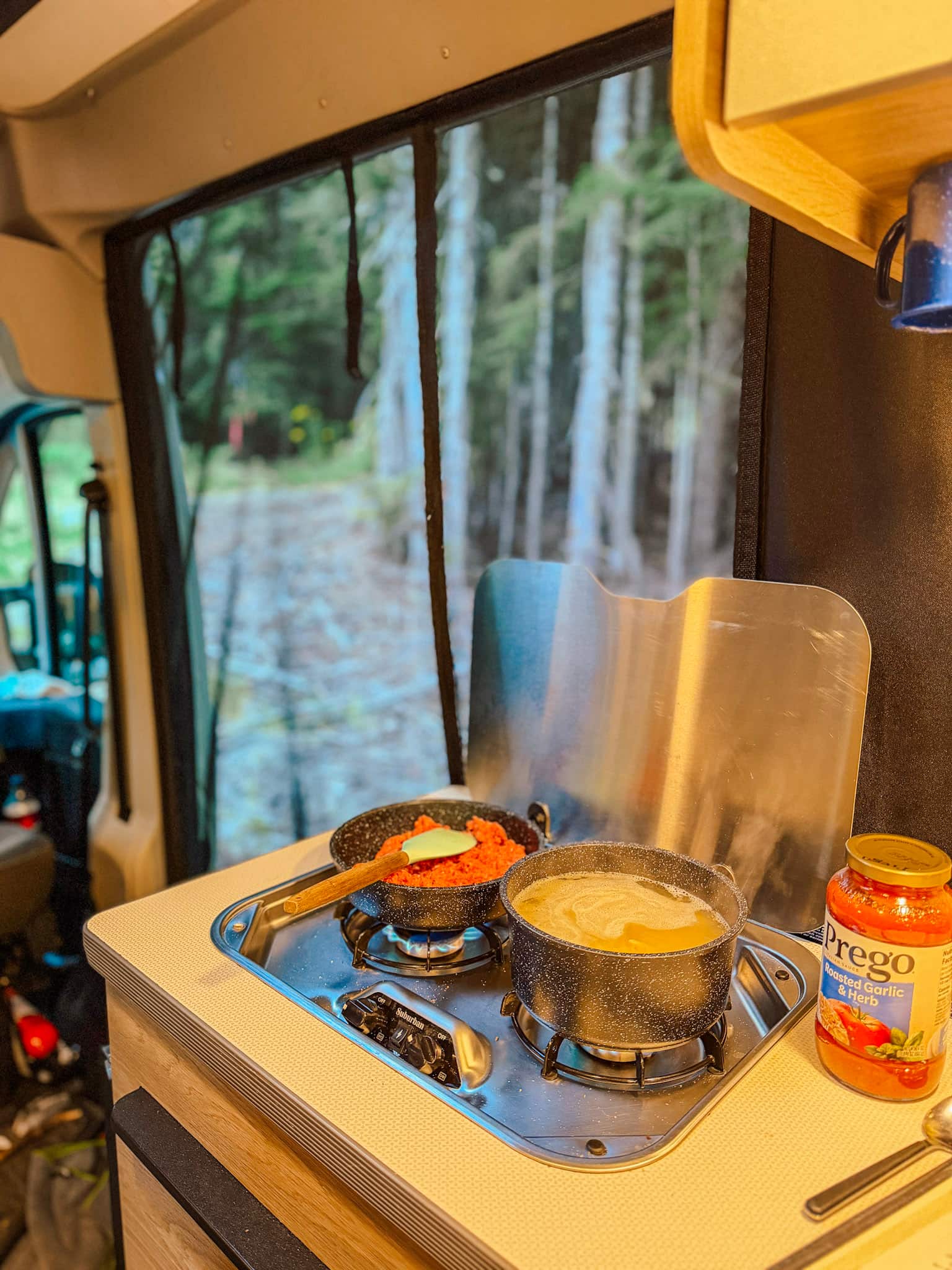
Our van had a two-burner stove, a small fridge/freezer unit, a small sink, and basic cookware. Here are some of the meals we enjoyed:
- Breakfast: Hard boiled eggs, fruit, cereal using shelf-stable milk, muffins, protein bagels + cream cheese.
- Lunch: Sandwiches, chips, fruit, or charcuterie boards filled with crackers, cheese, fruit, and hummus.
- Dinner: Simple meals such as quesadillas, lasagna in a bowl, meatball subs, campfire pizzas and tacos.
Cooking in a tiny space requires a little organization and pre-planning, but eating lunch overlooking the Pacific ocean without waiting an hour for a table at a crowded restaurant? Unbeatable.
Read next: 10 Easy Campervan Meal Ideas for Families
Campgrounds vs. Boondocking
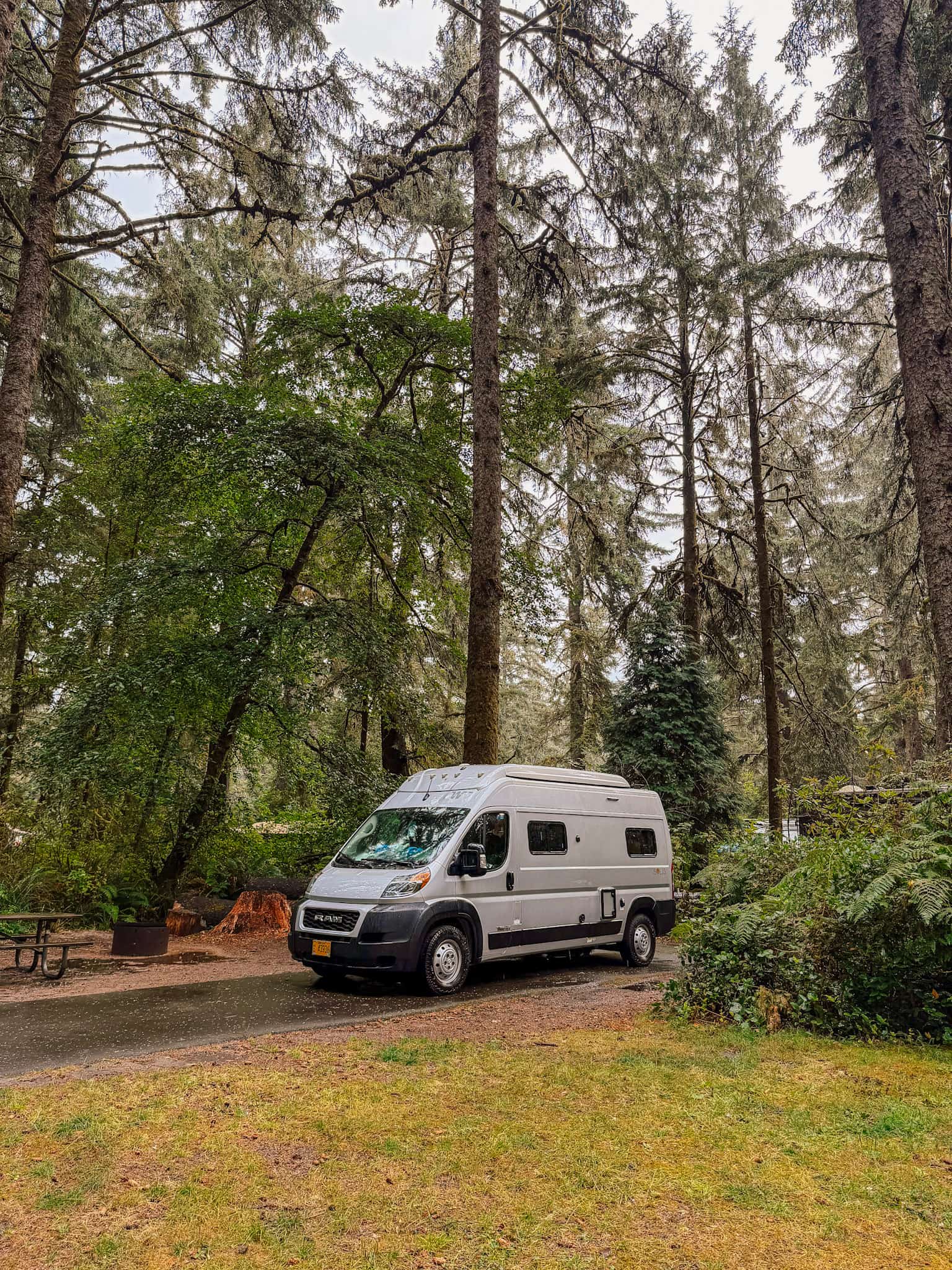
For this trip, we used a mix of private, state and National Park campgrounds, along with boondocking (off-grid camping).
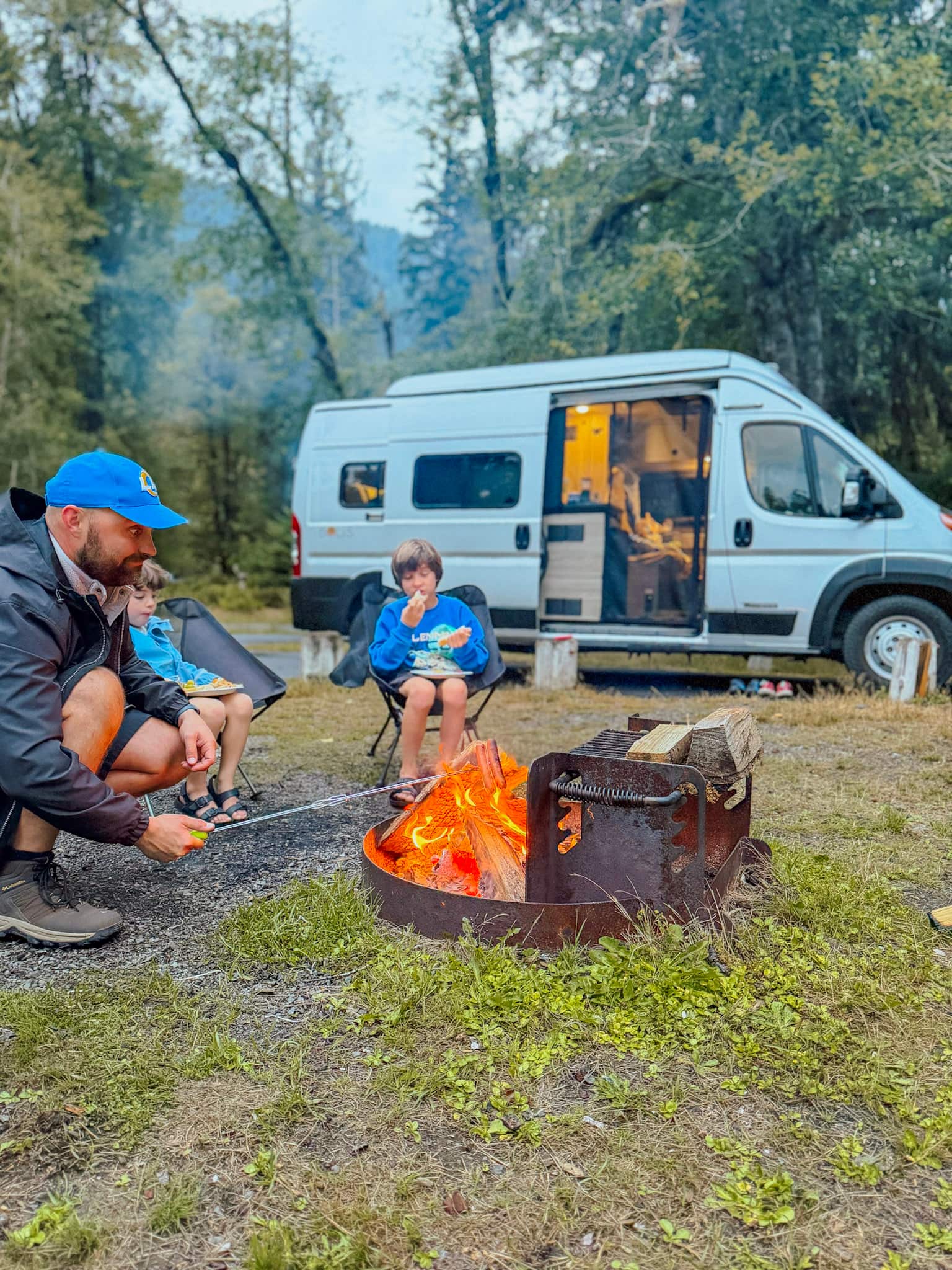
- Established Campgrounds:We booked sites in state parks and national park campgrounds (like Hoh Rainforest in Olympic National Park and Fort Stevens State Park in Oregon). These gave us access to fire pits, dump stations, clean restrooms, plus prime access to the park the next morning.
- Boondocking: We did boondock one night in the Gifford Pinchot National Forest. To do this, you basically just drive until you find a side road, and then pull over and park for the night. It’s very private and secluded, but as a trade off, you don’t have any campground amenities.
If you’re traveling with kids for the first time, I recommend booking at least 70% of your nights at established campgrounds with bathhouses so you have room for the kids to run around and easy access to facilities.
I also recommend booking campsites early, especially if you are planning to stay in National Parks or during peak travel season.
Showers, Restrooms, & Laundry Logistics
I’ve been asked about the bathroom situation a lot. Our van did have a “full” bathroom, aka a very tiny shower with limited hot water and a self contained toilet.
Since most of our campsites were tent sites, meaning we did not hook up to water, we decided to save our water reserve for cooking or washing hands/feet, and instead utilized the campground showers.
- Bathrooms: We utilized park facilities, visitor centers, and public restrooms throughout the day as much as possible. The less you use the campervan toilet, the less you have to empty it!
- Showers: We showered at campgrounds that had designated bathhouses to reserve our water supply. Make sure to check before hand, as not all campgrounds offer shower houses.
- Laundry: Midway through our 10-day trip, we stayed at a private campground that had onsite laundry services. We washing our laundry while cooking dinner and showering that evening. Doing this helped us pack less, since there is limited space for clothes in your campervan!
What It’s Really Like Driving a Campervan
If you’re nervous about driving a campervan, don’t be! If you can drive a full-size SUV or minivan, you can drive a campervan.
- Sightlines: Side mirrors are huge, and most rental vans come with backup cameras.
- Wind & Clearance: You do need to pay attention to overhead clearance in parking garages – we were unable to fit in a standard drive through and had to go inside instead.
- Parking: Truly the sweet spot of renting a campervan is that you can fit in regular parking spaces. No need to park at the back of the lot or pray you can find two spots next to each other.
What We Spent: Budget Breakdown Considerations
While costs vary depending on the time of year and the specific van you choose, here is how a campervan trip breaks down financially compared to a traditional rental car + hotel trip:
- Van Rental: Higher daily rate than a standard rental car, but it combines your transport and accommodation costs into one line item.
- Campsites: There is a wide range here, starting from $20–$40 per night for state/national parks and $50-$100 for private campgrounds, vs. $200–$450+ per night for hotels, VRBO’s or lodging inside the National Parks. You can save more in this category if you choose to boondock.
- Gas: Campervans consume more gas than a sedan, but modern Sprinters/Transits get surprisingly decent mileage. We drove around 1,200 miles and spent just over $400 on gas.
- Food: We saved hundreds of dollars by cooking 90% of our meals in the van rather than eating out three times a day.
Overall, it allowed us to take an incredible 10-day bucket list trip for significantly less than booking hotels across the PNW during peak season!
Read the full cost breakdown + comparison here.
What We Loved vs. What Was Harder Than Expected
What We Loved:
- Zero Constant Packing: Living out of the van meant we weren’t packing bags, checking out of hotels every morning, and reloading a trunk.
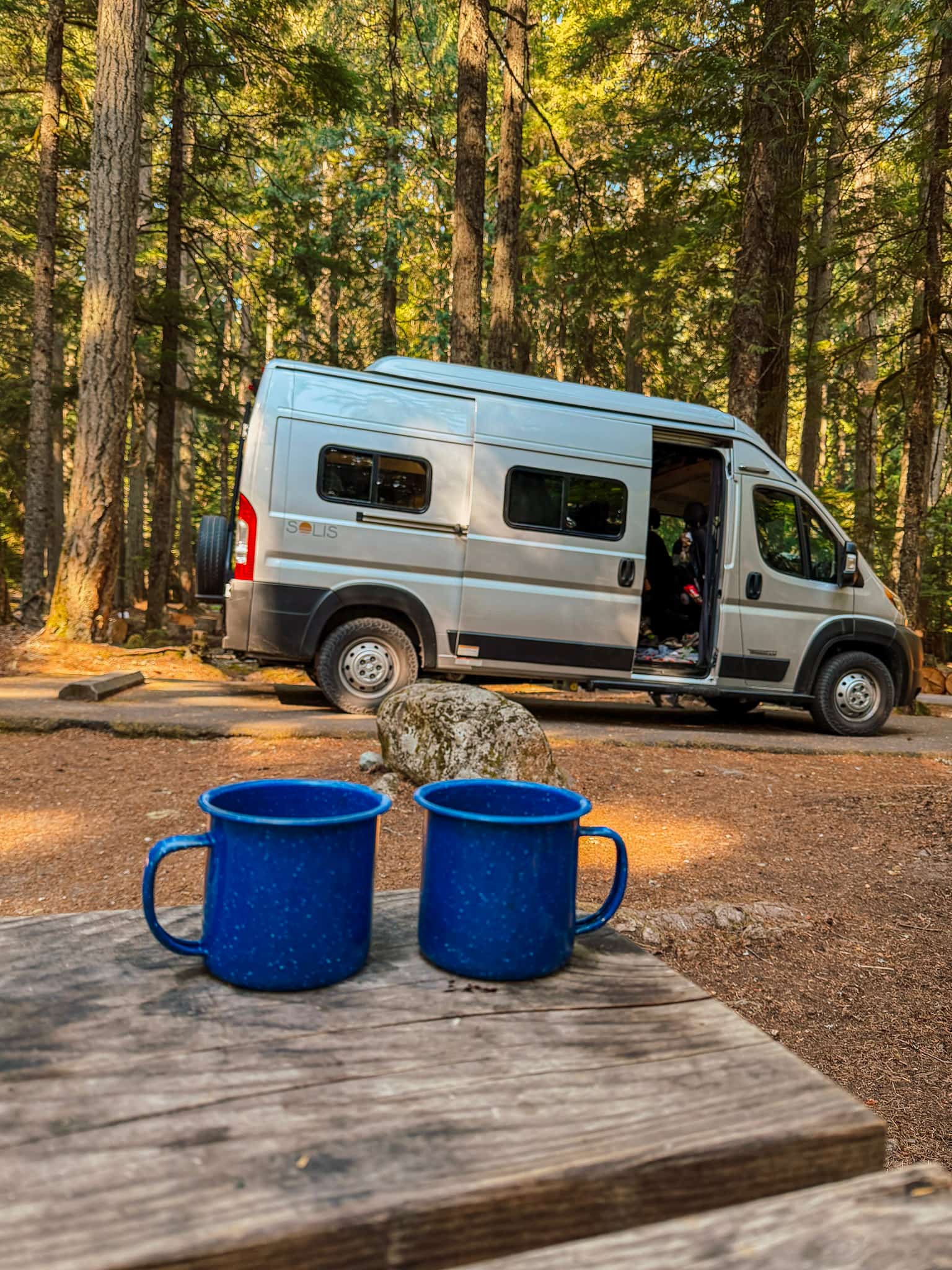
- Front-Row Seat to Nature: Waking up, sliding open the door, and drinking my coffee surrounded by the stunning views of the Pacific Northwest was truly unbeatable.
- Built-in Pitstop: Having your food, bathroom, and a bed with you is so convenient. Hungry after a trail? Perfect, I can whip up lunch in the parking lot. Long drive with no bathroom in sight? We can pull over on the side of the road to take care of business.
What Was Harder Than Expected:
- The Daily “Shift”: Converting the van from “drive mode” to “sleep mode” every evening takes a few minutes of moving bags around and rearranging to keep things organized.
- Sand & Dirt: Kids track in a lot of dirt, especially when you are spending your entire day outside. I found myself sweeping the floor several times a day.
- Close Quarters on Rain Days: The PNW is famous for rain. There were a few mornings and evenings where we found ourselves waiting out the showers in the van, which can feel cramped.
The Big Question: Would We Do It Again?
100% without a doubt.
Taking a campervan road trip through Washington and Oregon gave our family a level of freedom and adventure that a traditional hotel trip simply couldn’t match. It pushed us slightly out of our comfort zone, gave us the opportunity to make some incredible memories, and allowed us to experience the wild beauty of the PNW in the absolute best way possible.
If you’re on the fence about trying a campervan trip with your kids: take the leap, do your prep work, and embrace the adventure!
Ready to plan your own PNW Adventure?
- Check out our complete 10-Day Washington & Oregon Road Trip Itinerary for our exact day-by-day route, trail maps, and stop recommendations!
- Browse family campervan rentals on Outdoorsy to start planning your route.
- Top 10 RV & Campervan Essentials
- 1o Easy Campervan Meal Ideas for Families